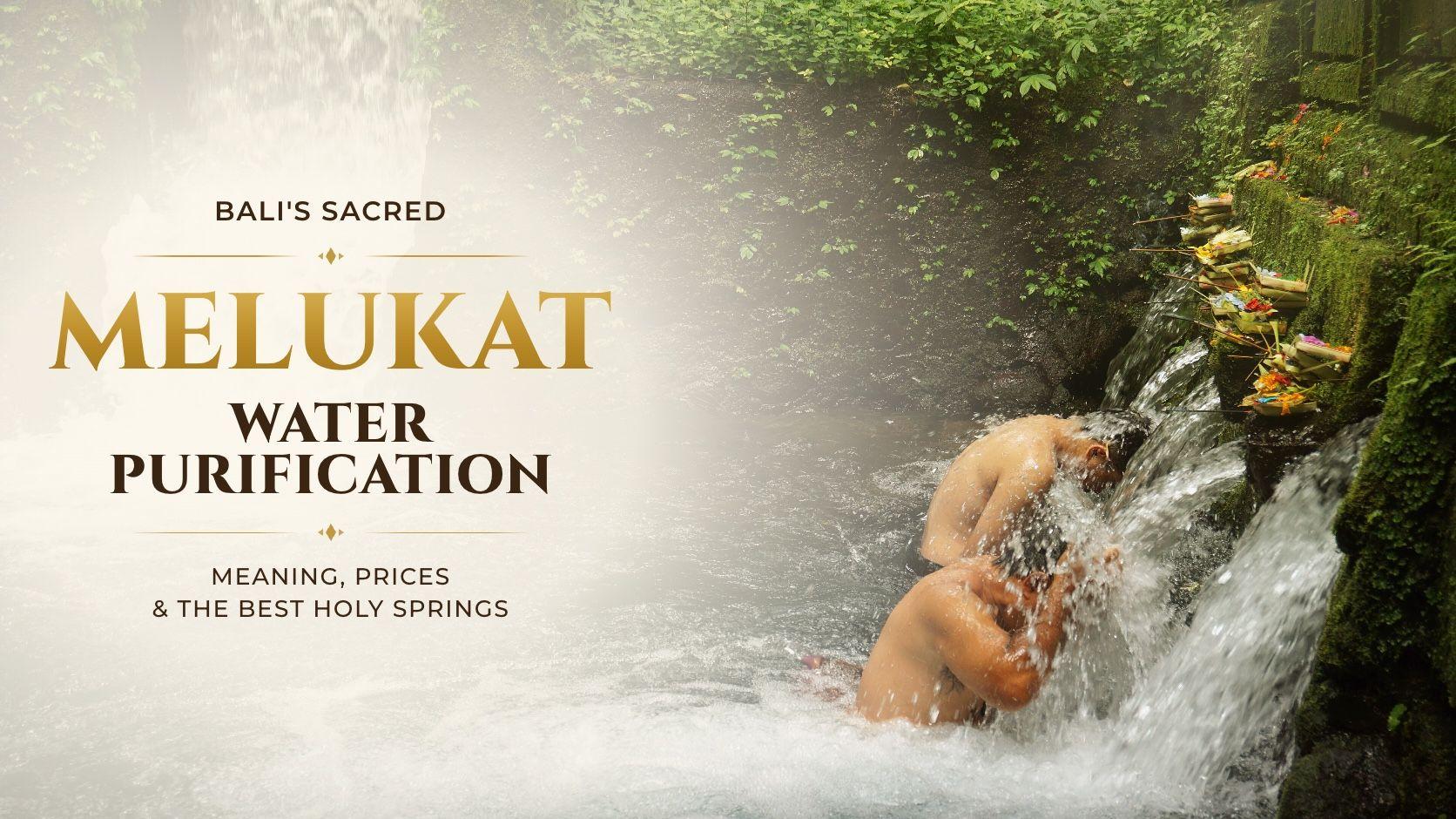
If you've spent any time looking at photos of Bali, you've probably seen people standing waist-deep in a stone pool, hands pressed together, as water pours over their heads from carved fountains. That's melukat, Bali's traditional water purification ritual.
For Balinese Hindus, melukat isn't a tourist activity. It's a sacred ceremony used to cleanse the body, mind, and spirit, and many locals do it regularly throughout the year.
The good news is that visitors are welcome to take part at many temples and holy springs, as long as you do it respectfully.
In this guide, you'll learn what melukat is, how the ceremony works step by step, how much it costs in 2026, and the best places to do melukat in Bali, from the famous Tirta Empul to quieter springs most tourists never find.
What Is Melukat?
Melukat (sometimes spelled malukat or melukat) is a Balinese Hindu purification ritual that uses holy water (tirta) to wash away negative energy, bad luck, and spiritual impurities.
The word is commonly linked to the Old Javanese word lukat, meaning to purify or to release. In practice, melukat is about letting go: of stress, of illness, of past mistakes, or of anything that feels spiritually "heavy."
Today, melukat is still an important part of everyday spiritual life in Bali. It's not a spa treatment or a wellness trend, even if some resorts now package it that way.
When Do Balinese People Do Melukat?
There's no single "right" day, but many Balinese choose days that are considered spiritually auspicious, including:
- Purnama (full moon) and Tilem (new moon)
- Kajeng Kliwon, a recurring day in the Balinese calendar associated with spiritual energy
- Banyu Pinaruh, the day after Saraswati, when thousands of locals head to springs and beaches to purify themselves
- Otonan, a person's Balinese birthday, which comes around every 210 days
- Before or after important life events such as weddings, a new job, or recovering from illness
For visitors, any day works. But if you go on a full moon or Banyu Pinaruh, expect the temples to be much busier with local worshippers. Remember that they have priority.
What Happens During a Melukat Ceremony?
Every temple has its own customs, but a typical melukat for visitors follows these steps:
- Change and dress respectfully. You'll rent or bring a sarong and sash, and leave your belongings in a locker.
- Prepare an offering. A small offering (canang sari or pejati) is usually bought on-site. It's presented to the gods before you enter the water. 👉 Learn more in our guide to Balinese offerings.
- Pray before entering the water. A priest (pemangku) or local guide will help you place your offering and say a short prayer, often with incense, flowers, and a sprinkle of holy water.
- Enter the pool and move from fountain to fountain. Starting at the first spout, you bow your head under each fountain, pray briefly, and let the water flow over your head. Some temples ask you to wash your face and rinse your mouth three times.
- Skip the fountains you're told to skip. At some temples, certain spouts are reserved for funeral rites or specific ceremonies. Your guide will point them out.
- Finish with a final blessing. After leaving the water, you may receive a final prayer, a dab of rice grains on your forehead (bija), and holy water to drink or sprinkle.
The whole ritual usually takes 30 to 60 minutes, depending on how busy the temple is and how many fountains there are.
How Much Does Melukat Cost in Bali?
The ritual itself is usually free, but you'll pay for temple entry and a few extras. Here's what to budget per person in 2026:
- Temple entrance fee: IDR 0–75,000, depending on the location
- Sarong rental: around IDR 10,000 (sometimes included in the ticket)
- Locker: IDR 10,000–15,000
- Offering (canang sari): from IDR 10,000
- Local guide or pemangku: IDR 100,000–150,000 (often negotiable)
- Donation (punia): optional, but always appreciated
In total, a self-organized melukat at a public temple usually costs IDR 50,000–250,000 per person.
If you'd rather have everything arranged for you, guided melukat tours with hotel pick-up typically start around IDR 450,000–700,000 per person. Private ceremonies led by a high priest, often sold by luxury resorts and spas, can cost IDR 1,500,000 or more.
Prices change regularly and differ between sources, so always confirm at the ticket counter before you go.
The Best Places for Melukat in Bali
There are dozens of holy springs across the island. These are the most popular and visitor-friendly options, from the most famous to the most peaceful.
1. Pura Tirta Empul (Tampaksiring, near Ubud)
Tirta Empul is the most famous melukat temple in Bali, and for good reason. Founded more than a thousand years ago, it's built around a natural spring that feeds two long purification pools lined with carved stone spouts.
According to legend, the god Indra created the spring to revive his army after they were poisoned by the evil king Mayadenawa, which is why its water is believed to have healing powers.
- Location: Tampaksiring, Gianyar, about 35–40 minutes' drive north of Ubud, on the road to Kintamani (an easy stop on a Mount Batur day trip)
- Entrance fee: around IDR 75,000 for adults and IDR 50,000 for children
- Extras: sarong around IDR 10,000, locker around IDR 15,000
- Best for: first-timers who want the iconic experience
Tip: Tirta Empul gets extremely crowded from mid-morning. Arrive right at opening time for a calmer experience and better photos.
2. Pura Mengening (Tampaksiring, near Ubud)
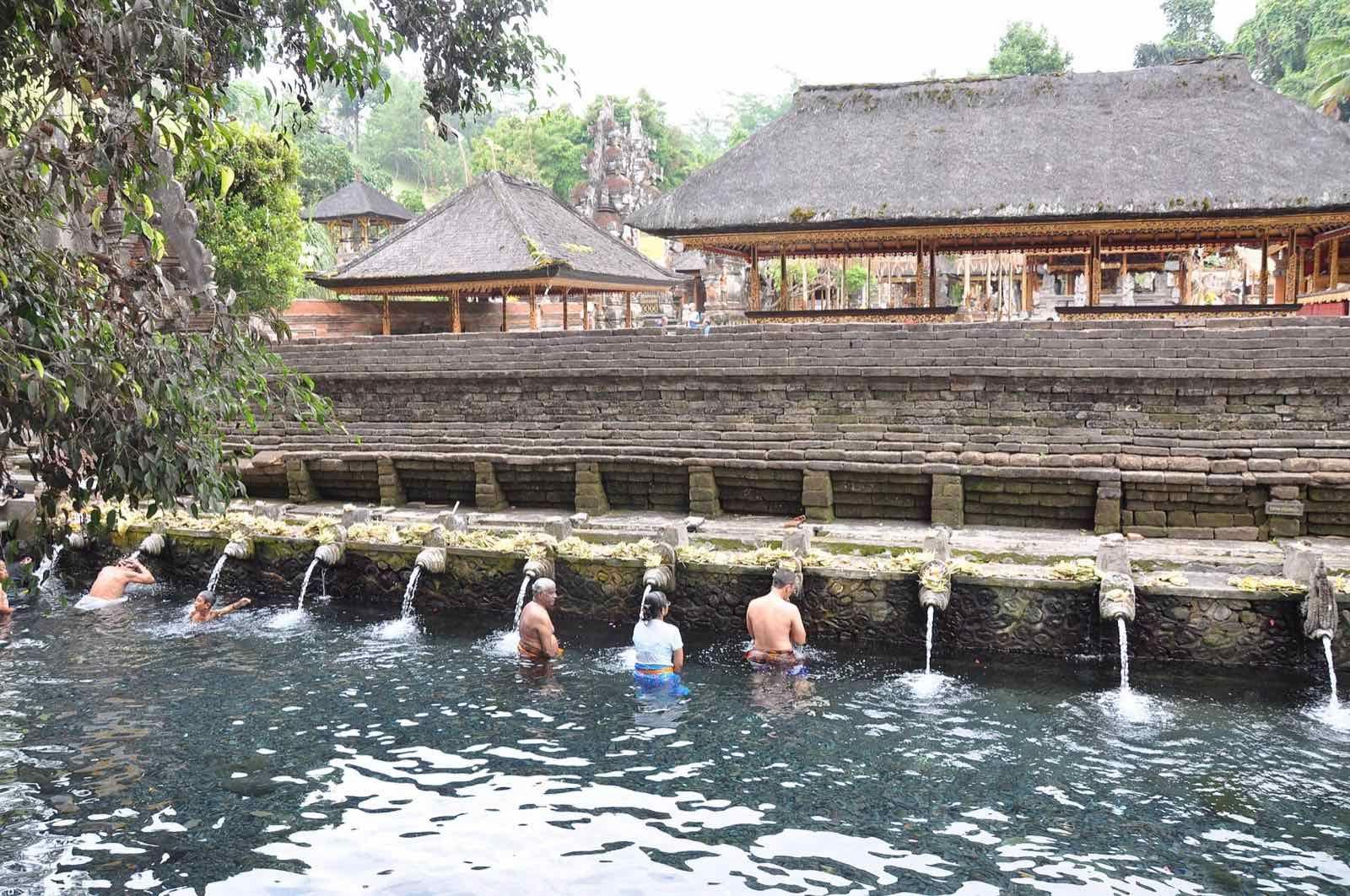
Just a short walk from Tirta Empul, Pura Mengening feels like a completely different world. It's smaller, surrounded by jungle, and visited mostly by local worshippers. Spring water pours from moss-covered stone spouts into a small, shaded pool.
- Location: Tampaksiring, Gianyar, about 35–40 minutes' drive north of Ubud and a 10-minute walk from Tirta Empul
- Entrance fee: around IDR 30,000, with sarong rental often included
- Best for: travelers who want a quieter, more authentic atmosphere
There are fewer guides and less English spoken here, so it's a better choice if you already know the basics of melukat, or if you come with your own guide.
3. Pura Gunung Kawi Sebatu (Tegallalang, near Ubud)
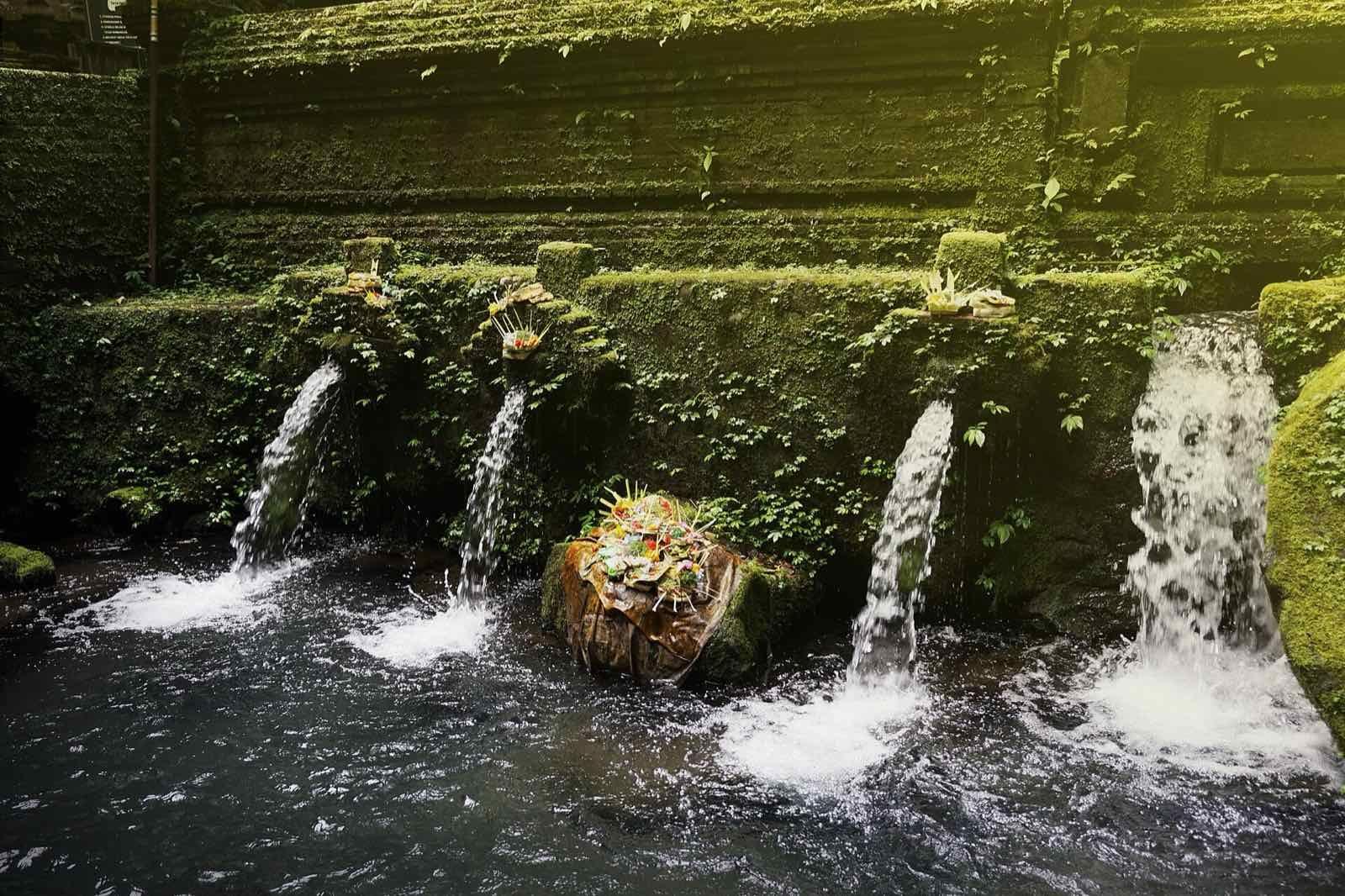
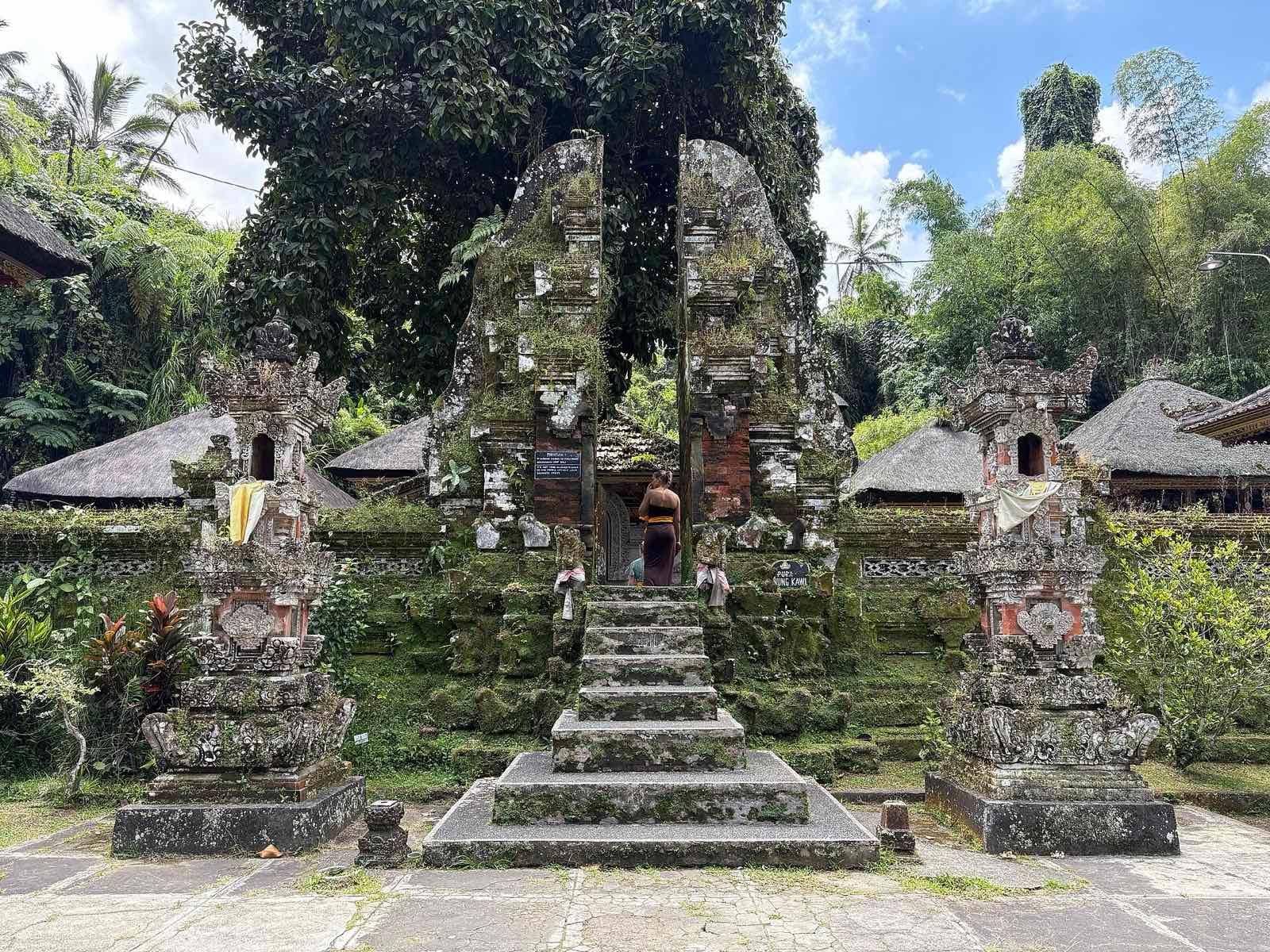
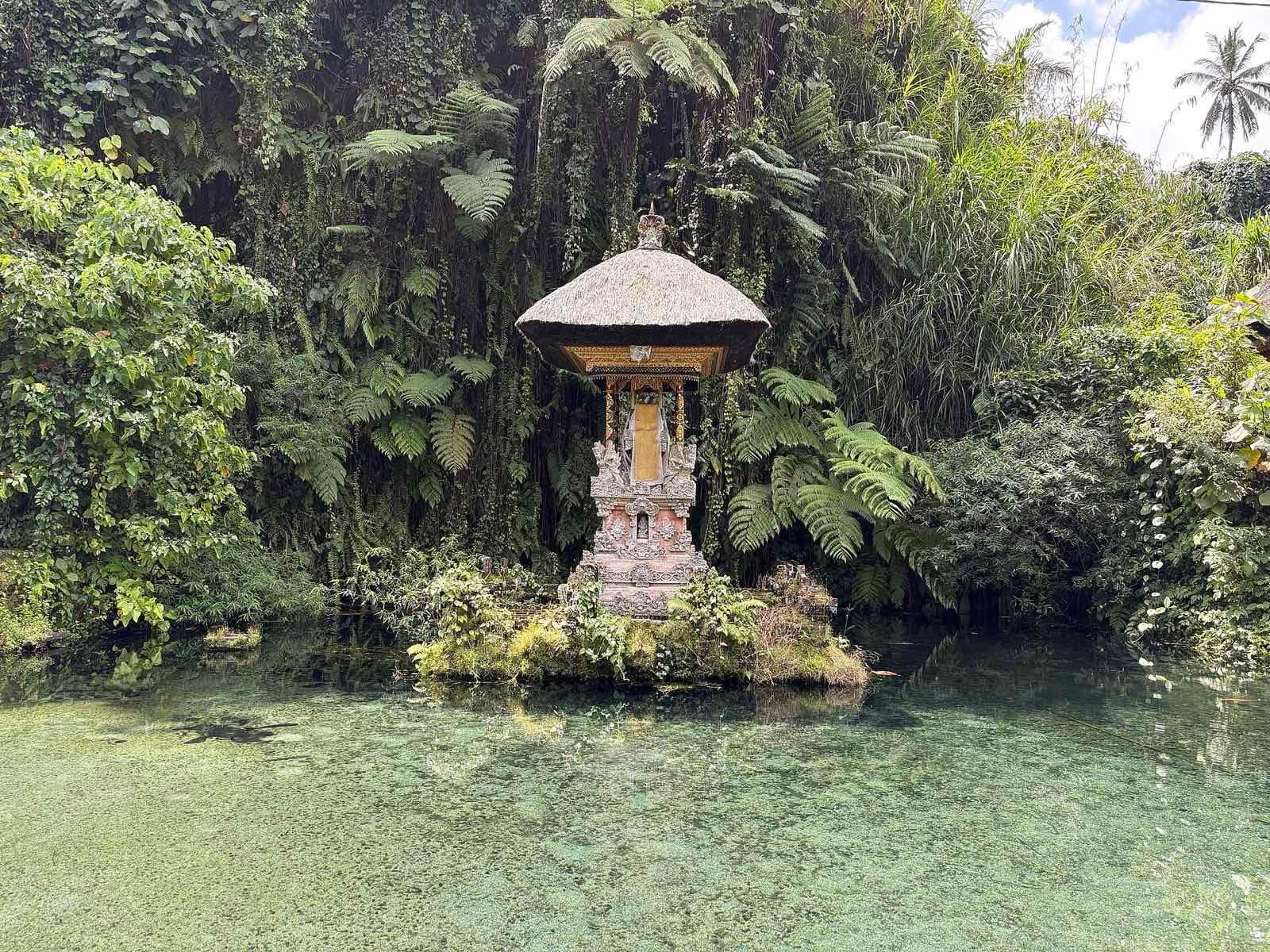
Gunung Kawi Sebatu is often described as a smaller, more peaceful version of Tirta Empul. The temple is set among lush gardens, lotus ponds, and koi-filled pools, with bathing areas fed by natural springs. You enter through a traditional Balinese split gate (candi bentar).
- Location: Sebatu village, Tegallalang, about 30 minutes' drive north of Ubud and 15 minutes from the Tegallalang Rice Terraces
- Entrance fee: around IDR 30,000–50,000 (sources vary)
- Best for: first-timers who want a beautiful setting without the crowds
At the heart of the temple, a crystal-clear spring-fed pond surrounds a small shrine, one of the most peaceful spots in the Ubud area.
It's easy to combine with a visit to the Tegallalang rice terraces on the same morning.
4. Pura Tirta Sudamala (Bangli, between Ubud and Kintamani)
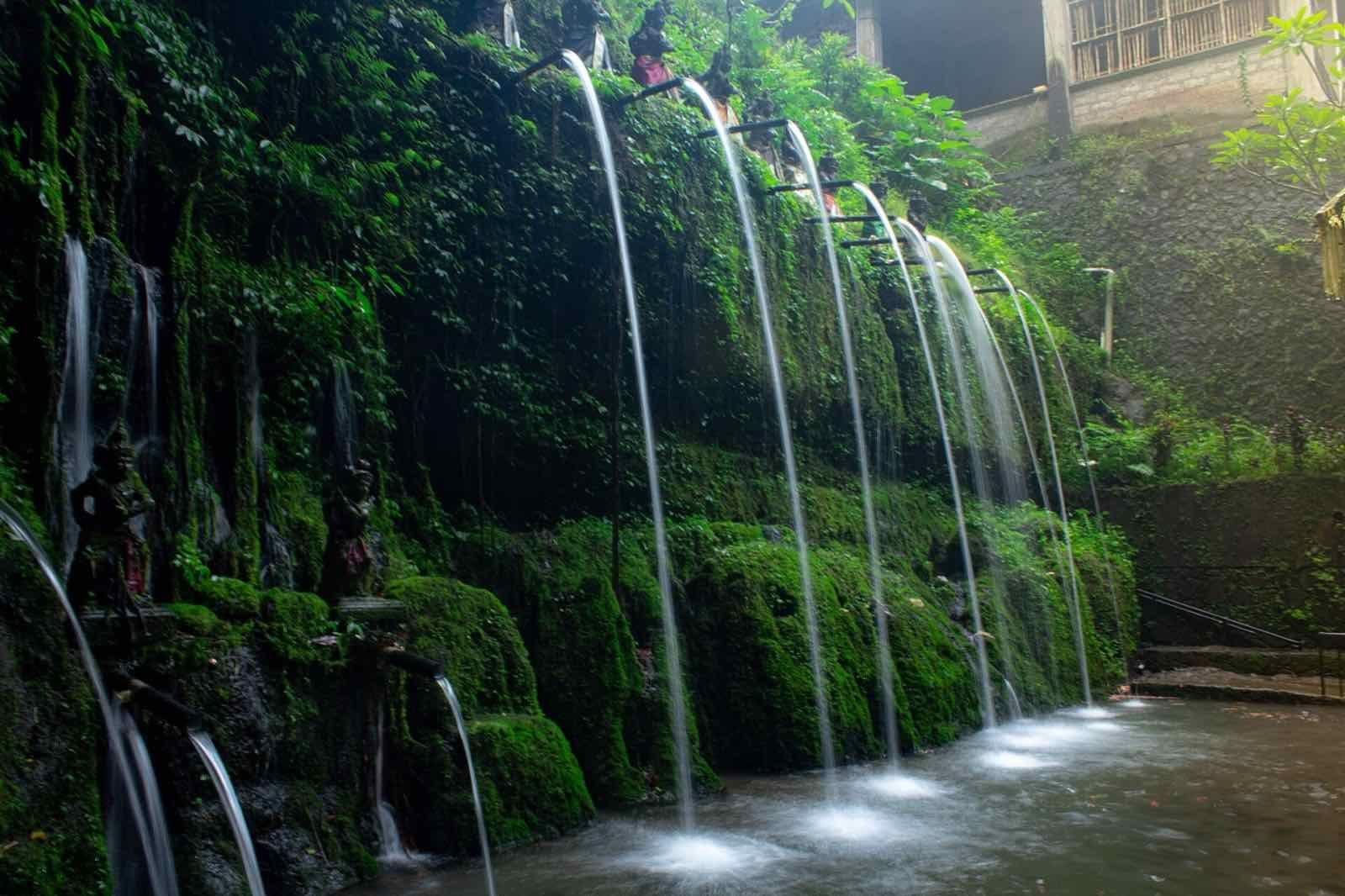
Tirta Sudamala is a small holy spring near Bangli town, and one of the best-kept secrets for melukat. The name sudamala roughly means "to cleanse impurities," and the site is mainly used by Balinese who come specifically to purify themselves or collect holy water.
Water falls from a long row of slender fountains along a moss-covered wall. The main fountains are linked to the Dewata Nawa Sanga, the nine gods guarding the nine directions in Balinese Hinduism.
- Location: Bebalang, Bangli, about 40 minutes' drive from Ubud and 45 minutes from Kintamani
- Entrance fee: around IDR 30,000 (cash only)
- Full experience with a pemangku, offering, sarong, and locker: around IDR 200,000
- Best for: a calm, spiritual experience away from the tour buses
It pairs well with a day trip to Kintamani and Mount Batur.
5. Taman Beji Griya Waterfall (Badung, near Canggu)
Taman Beji Griya is a spectacular site where a small waterfall flows through a canyon of hand-carved cliffs, shrines, and caves. Melukat here takes place directly under the waterfall.
- Location: Punggul village, Abiansemal, Badung, about 45 minutes' drive from Canggu, Seminyak or Ubud
- Price: melukat is usually sold as a package including a guide, sarong, offering, and locker, generally from around IDR 300,000 per person
- Best for: travelers staying in the south who want a dramatic, photogenic setting
Visits are often scheduled in time slots, so it's best to book in advance.
What to Wear and Bring for Melukat
You'll get wet from head to toe, so come prepared:
- Swimwear to wear under your sarong (modest, not a tiny bikini)
- A sarong and sash. You can rent them on-site, but bringing your own is better for the environment.
- A change of clothes and a towel
- A waterproof bag for your phone
- Cash in small notes for tickets, lockers, offerings, and donations
- Modest clothes covering your shoulders and knees for walking around the temple
Temples don't allow you to walk around in swimwear only, so keep your sarong on at all times.
Melukat Etiquette: Dos and Don'ts
Melukat is a religious ceremony, not a pool party. A few simple rules go a long way:
- Do follow the order of the fountains and the instructions of your guide or pemangku.
- Do let local worshippers go first, especially on holy days.
- Do keep your head lower than the priest's during blessings.
- Don't swim, splash, or play in the pools.
- Don't use the fountains reserved for funeral rites.
- Don't take loud selfies or block others while filming. Ask before photographing people.
- Don't enter the temple if you're menstruating. In Balinese tradition, women on their period, people with open wounds, and those in mourning are considered sebel (temporarily impure) and are not allowed in temple grounds.
👉 Curious about the deeper meaning behind Balinese traditions? Read our guides to the Balinese caste system and the Balinese naming system.
Frequently Asked Questions
Can tourists do melukat in Bali?
Yes. Most purification temples welcome visitors of any religion, as long as you dress appropriately, follow the rules, and respect the ceremony.
How much does melukat cost?
Expect IDR 50,000–250,000 per person at a public temple, including entry, sarong, locker, offering, and an optional guide. Organized tours start around IDR 450,000.
What is the best place for melukat in Bali?
Tirta Empul is the most famous. For a quieter experience, try Pura Mengening, Gunung Kawi Sebatu, or Tirta Sudamala.
Do I need to book melukat in advance?
Not for public temples like Tirta Empul or Mengening; you can simply show up. For Taman Beji Griya and private priest-led ceremonies, booking ahead is recommended.
Can I do melukat on my period?
No. In Balinese tradition, women who are menstruating are not allowed to enter temples or take part in ceremonies.
What is the best time of day for melukat?
Early morning. The temples are calmer, the light is softer, and you'll avoid the tour groups that arrive from mid-morning.
Final Thoughts
Melukat is one of the most meaningful ways to connect with Balinese culture. Whether you join the crowds at Tirta Empul or find a quiet spring in Bangli, you'll get a rare glimpse into how deeply water and spirituality are woven into daily life on the island.
You don't need to be Hindu to take part. You just need to come with an open mind, a sarong, and a little respect.
And who knows? You might leave feeling a little lighter than when you arrived on the Island of the Gods.