If you’ve spent any time in Bali, you’ve probably noticed something surprising: many people seem to share the same names.
Wayan. Made. Nyoman. Ketut.
At first, it can feel confusing; how can so many people have identical names?
The answer lies in Bali’s fascinating naming system, which is deeply connected to birth order, family structure, and traditional caste systems. Once you understand it, everything starts to make sense.
Names Based on Birth Order (Not Uniqueness)
One of the most distinctive aspects of Balinese culture is that names are often based on the order in which a child is born, rather than being completely unique.
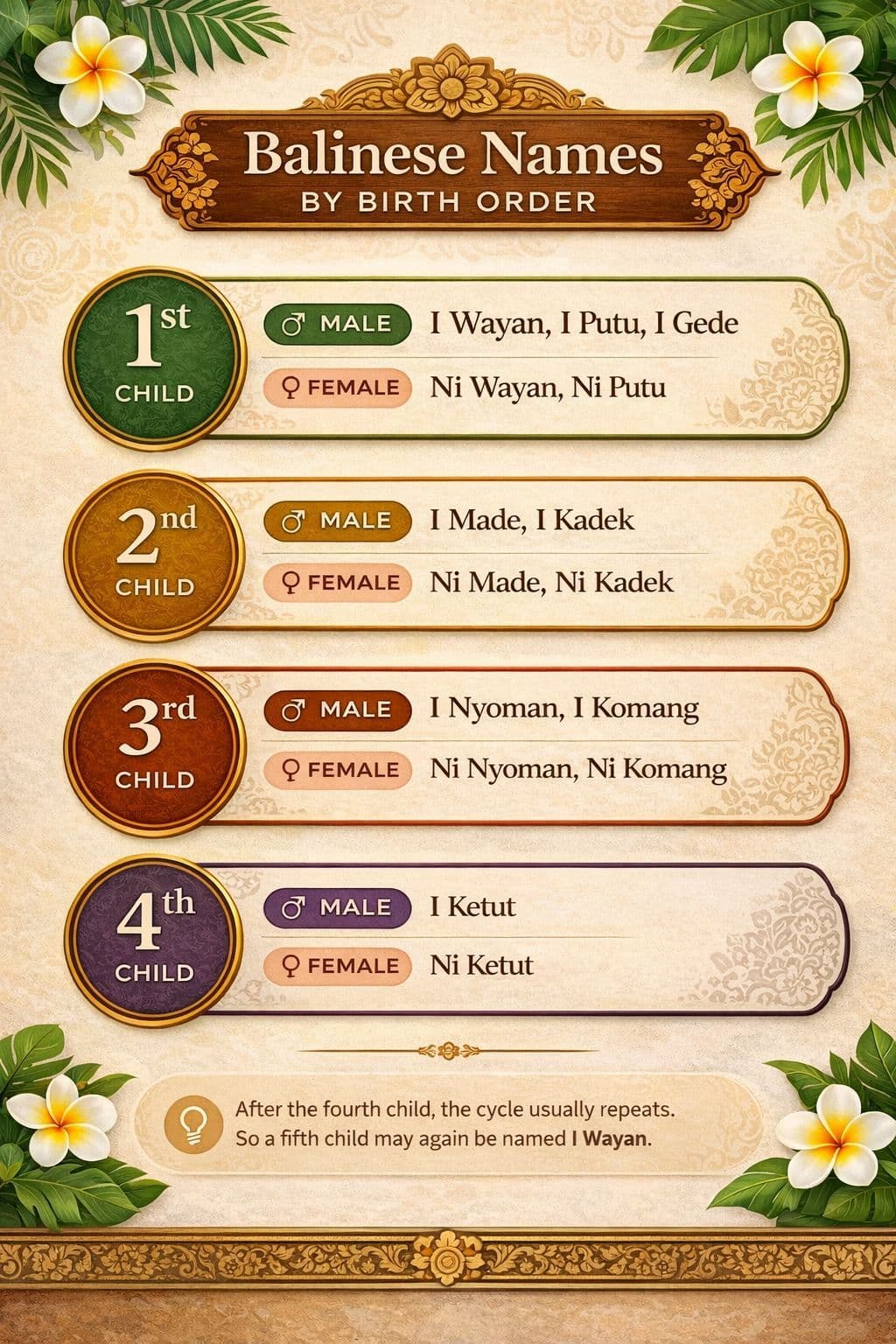
Here’s the basic structure:
First-born child
- Wayan
- Putu
- Gede (often for males)
Second-born child
- Made
- Kadek
Third-born child
- Nyoman
- Komang
Fourth-born child
- Ketut
After the fourth child, the cycle usually repeats. So a fifth child may again be named Wayan.
👉 This is why you’ll meet many “Wayan”s in Bali — they are simply first-born children.
Male and Female Naming
Balinese names often include a prefix that indicates gender:
- “I” for males
- “Ni” for females
Examples:
- I Wayan → Male, first-born
- Ni Made → Female, second-born
These prefixes are commonly used in daily life and help distinguish gender when names are otherwise identical.
The Role of Caste in Balinese Names
Beyond birth order, Balinese names can also reflect caste (known locally as “caste” or “wangsa”), especially among higher social groups.
Brahmana (Priestly class)
- Ida Bagus (male)
- Ida Ayu (female)
Traditionally associated with priests and spiritual leaders.
Ksatria (Warrior / Royal class)
- Cokorda
- Anak Agung
- Dewa / Dewa Ayu
Historically linked to royalty, leaders, and warriors.
Wesia (Noble / Administrative class)
Less commonly referenced today, but still part of the traditional structure.
Sudra (Common people)
- The majority of the population
- Typically use the birth order naming system (Wayan, Made, etc.)
How Names Are Actually Used
In real life, a full Balinese name can include several elements:
- Gender prefix (I / Ni)
- Birth order name (Wayan, Made, etc.)
- Personal name
- Caste title (if applicable)
For example:
- I Wayan Suarta
- Ni Made Sri
- Anak Agung Rai
Even if many people share the same first name, the full name remains unique.
Why You’ll Hear So Many Nicknames
Because so many people share similar names, nicknames are extremely common in Bali.
People might be called:
- By their personality
- Their job
- A physical trait
- Or even something humorous
This makes everyday communication much easier and more personal.
A Cultural Insight That Goes Beyond Names
What makes the Balinese naming system so interesting is what it represents.
Rather than emphasizing individuality through unique names, it highlights:
- Family structure
- Community identity
- Cultural continuity
As one local explained, these names are “not random” — they tell a story about where someone fits within their family and society.
A Simple Tip for Travelers
Next time you meet someone named Wayan, Made, Nyoman, or Ketut, try asking:
“Are you the first (or second, third…) child?”
It’s a great conversation starter — and a small way to connect more deeply with Balinese culture.
Discover Bali Beyond the Surface
Understanding traditions like the naming system is one of the best ways to experience the real Bali - beyond beaches and resorts.
Explore more cultural insights and travel tips on Bali Ready to make your trip even more meaningful.