Indonesia is home to hundreds of regional dishes, but few are as iconic as sate (or satay, as it is often written in English). Found everywhere from roadside warungs to night markets and beachside restaurants, sate is one of the easiest — and most delicious — ways to explore Indonesian cuisine while traveling through Bali and Lombok.
While many international visitors are familiar with “chicken satay,” most are surprised to discover how many different varieties exist across Indonesia. Some use rich peanut sauces, others are spicy and dry-rubbed, and some are even made from fish, snail, skin, or intestines.
This guide introduces some of the most common and interesting sate varieties you are likely to encounter in Bali and Lombok.
What Is Sate?
Sate is an Indonesian dish consisting of skewered and grilled meat, usually cooked over charcoal and served with a sauce or seasoning. The word “sate” is the Indonesian spelling, while “satay” is the English adaptation commonly used internationally.
Sate is popular throughout Indonesia, but every region has developed its own style, marinades, sauces, and cooking techniques.
Some sate are sweet and smoky, while others are spicy, savory, creamy, or intensely aromatic thanks to ingredients like lemongrass, galangal, turmeric, shrimp paste, and kecap manis (sweet soy sauce).
What Meat Is Indonesian Sate Made From?
The most common types of sate are made from:
- Chicken (ayam)
- Goat (kambing)
- Beef (sapi)
- Pork (babi)
- Fish and seafood
One important cultural note for travelers: in Indonesia, the word kambing is often translated into English as “lamb,” but in practice it almost always refers to goat meat, not lamb. Indonesia does not commonly distinguish between goat and lamb linguistically the same way English does.
You will also occasionally find more unusual variations using:
- chicken skin,
- intestines,
- snail,
- or minced seafood.
Chicken Sate (Sate Ayam)
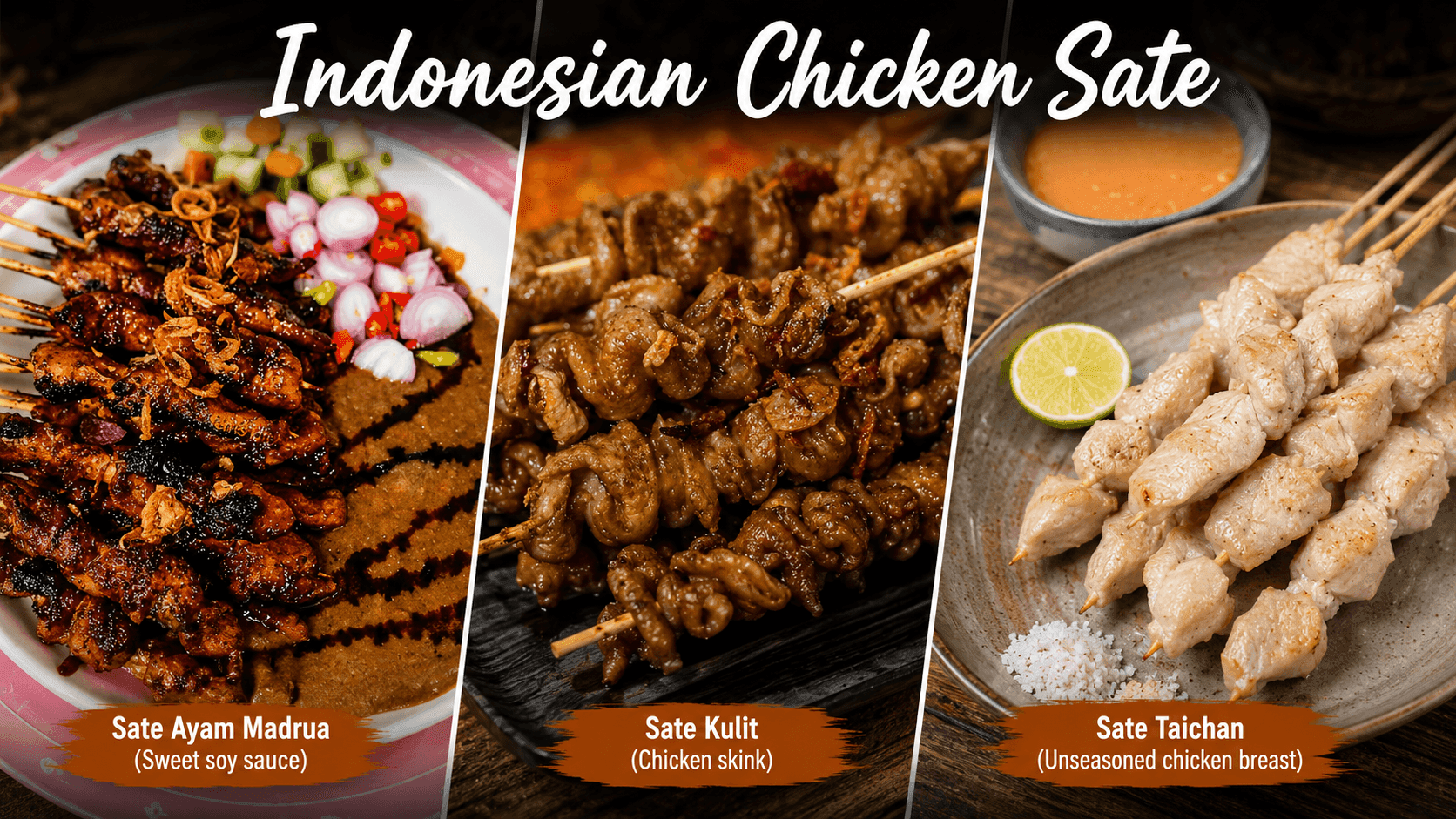
Chicken sate is by far the most common type you will encounter in Bali and Lombok.
Sate Ayam with Peanut Sauce
This is the classic Indonesian satay most travelers recognize: grilled chicken skewers served with a rich peanut sauce.
The sauce is usually made with:
- peanuts,
- garlic,
- palm sugar,
- chili,
- and kecap manis.
The flavor is sweet, savory, smoky, and slightly spicy.
In tourist areas, this is often simply called “chicken satay.”
Sate Taichan
Originally popularized in Jakarta, sate taichan has become increasingly common across Indonesia.
Unlike traditional chicken sate, it is:
- lightly seasoned,
- not coated in peanut sauce,
- and typically served with a spicy sambal on the side.
The meat is paler because it is grilled without sweet soy sauce marinades.
If you prefer spicy food and less sweetness, this is one of the best sate varieties to try.
Sate Kulit
Sate kulit is made from grilled chicken skin.
It is rich, smoky, slightly chewy, and usually heavily seasoned with sweet soy sauce and spices.
While it may sound unusual to some visitors, it is a very popular Indonesian street food snack.
Sate Usus
Sate usus uses chicken intestines threaded onto skewers and grilled or fried with spices.
The texture is slightly chewy and savory, and it is commonly sold by street vendors and small warungs.
This is more of a local snack than a tourist dish, but adventurous eaters should definitely try it at least once.
Beef and Goat Sate
Sate Madura
One of the most famous satay styles in Indonesia, Sate Madura originates from Madura Island in East Java but is now found everywhere across the country.
It is usually made from:
- chicken,
- goat,
- or beef.
The defining feature is its thick peanut sauce combined with kecap manis.
The meat is marinated before grilling, giving it a deep caramelized flavor.
You will find Sate Madura almost everywhere in Bali and Lombok, from night markets to roadside carts.
Sate Padang
Sate Padang comes from West Sumatra and is very different from the sweeter satay styles many tourists expect.
Instead of peanut sauce, it uses a thick yellow-orange sauce made from:
- rice flour,
- turmeric,
- spices,
- and beef broth.
The flavor is rich, spicy, savory, and deeply aromatic.
The skewers are usually made from beef, beef tongue, or organ meats.
This is one of Indonesia’s most unique sate styles and highly recommended for food lovers.
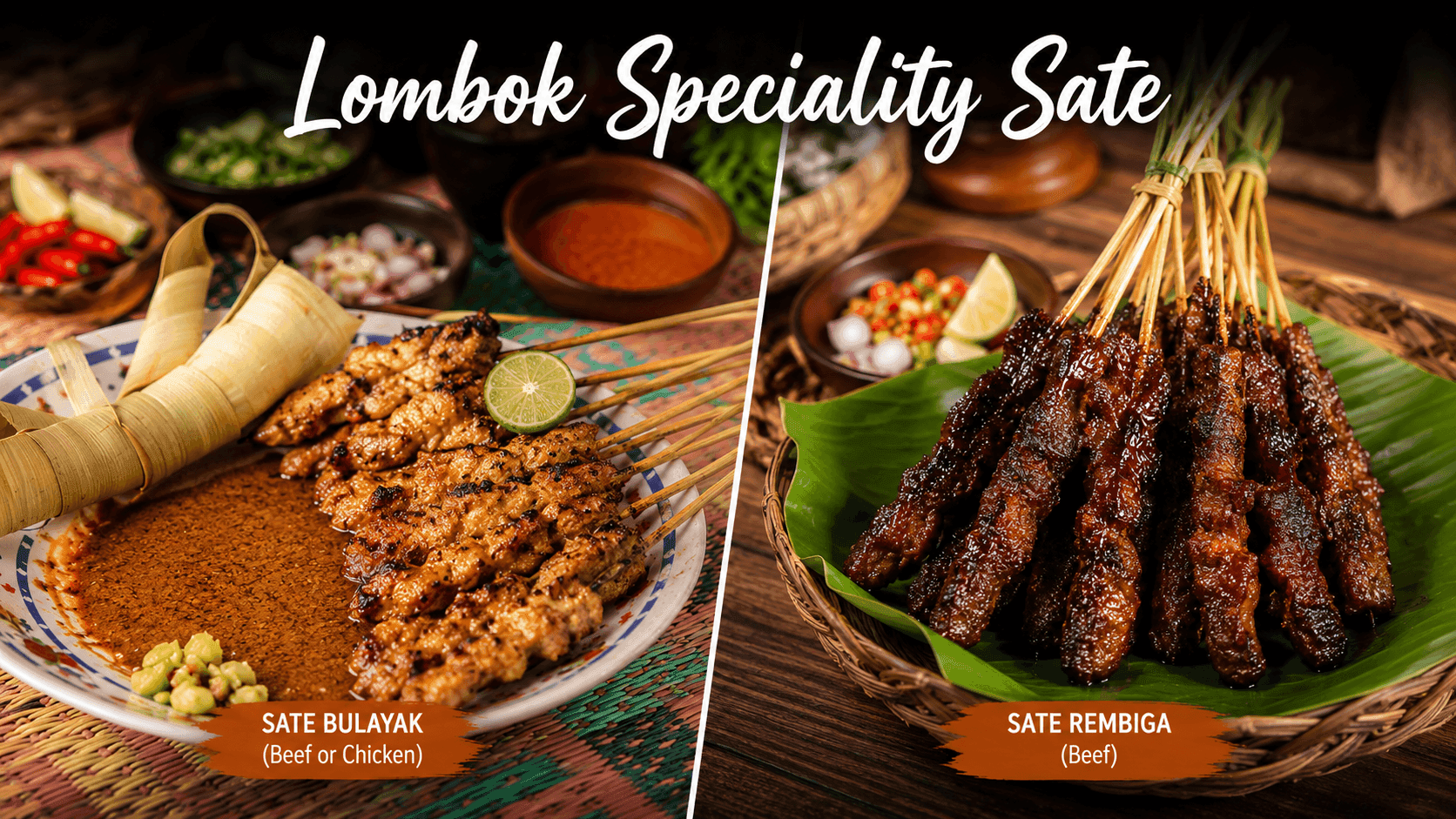
Sate Rembiga
Originating from Lombok, Sate Rembiga is one of the island’s signature dishes.
It is usually made with beef marinated in:
- chili,
- garlic,
- palm sugar,
- and spices.
Compared to peanut-based sate, the flavor is:
- spicier,
- smokier,
- and more intensely savory.
If you enjoy grilled meat with heat, this is one of the best local dishes to try in Lombok.
Sate Bulayak
Another Lombok specialty, Sate Bulayak is typically served with a spiced peanut curry sauce and rice cakes wrapped in palm leaves called bulayak.
The sate itself is often beef or chicken, but the sauce is what makes the dish special:
- creamier,
- richer,
- and more savory than standard peanut sauce.
This is a great introduction to Sasak cuisine, the traditional cuisine of Lombok.
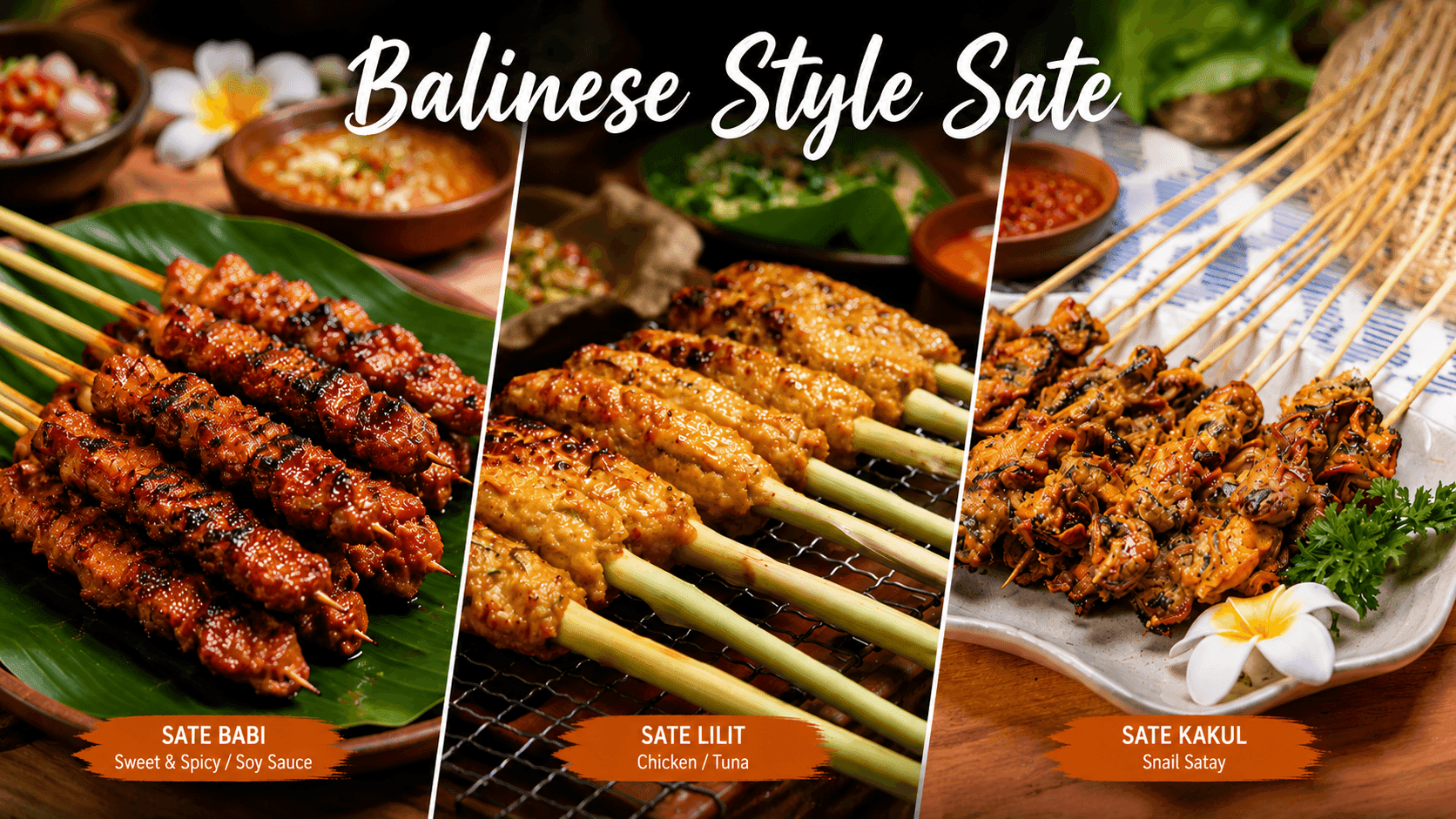
Balinese Pork Sate (Sate Babi)
Because Bali is predominantly Hindu, pork is much more common there than in most of Indonesia.
Balinese Pork Satay
Balinese pork sate is usually heavily seasoned with traditional Balinese spice pastes (bumbu Bali).
You will commonly encounter two flavor styles:
Bumbu Pedas / Manis
A spicy-sweet marinade using chili, garlic, shallots, and palm sugar.
Sos Kecap
A sweeter soy-based glaze using kecap manis.
The pork is often slightly fattier than chicken sate, giving it a richer flavor when grilled over charcoal.
Seafood and Fish Sate
Sate Lilit
One of Bali’s most famous dishes, Sate Lilit is very different from regular skewered meat chunks.
Instead of diced meat, minced meat or fish is mixed with:
- coconut,
- spices,
- shallots,
- lime leaves,
- and chili.
The mixture is then wrapped (“lilit” means “to wrap”) around bamboo sticks or lemongrass stalks before grilling.
Common versions include:
- chicken sate lilit,
- and tuna sate lilit.
This is one of the best dishes for travelers wanting to try authentic Balinese flavors.
Sate Kakul
One of Bali’s more unusual local specialties, Sate Kakul is made from freshwater snails.
The snails are removed from their shells, skewered, and grilled with rich Balinese spices.
The texture is slightly chewy and often compared to shellfish.
While not commonly found in tourist restaurants, it occasionally appears in traditional Balinese warungs and local food stalls.
Sate Tusuk Ikan (Fish Satay)
Fresh tuna and other fish are commonly used for sate in Bali and Lombok coastal areas.
These fish skewers are often:
- simpler,
- lighter,
- and less sweet than meat-based sate.
Near beaches and fishing villages, they are frequently grilled fresh to order.
Tuna satay is especially popular around Lombok and the Gili Islands.
Which Indonesian Sate Should You Try First?
If it is your first time visiting Bali or Lombok, these are the easiest introductions:
Best for Beginners
- Sate ayam with peanut sauce
- Sate Madura
- Sate lilit
Best for Spice Lovers
- Sate taichan
- Sate Rembiga
Best Local Specialties
- Sate Bulayak
- Balinese pork sate
- Sate lilit tuna
Most Adventurous
- Sate usus
- Sate kulit
- Sate kakul
Final Thoughts
Sate is much more than just “Indonesian satay.” It is an entire category of regional dishes reflecting Indonesia’s incredible culinary diversity.
From sweet peanut-coated chicken skewers to fiery Lombok beef sate and aromatic Balinese seafood sate, every region has its own interpretation.
For travelers visiting Bali and Lombok, trying different sate varieties is one of the easiest — and most affordable — ways to experience authentic local food culture.
And once you start exploring beyond the standard chicken satay, you quickly realize just how diverse Indonesian cuisine really is.