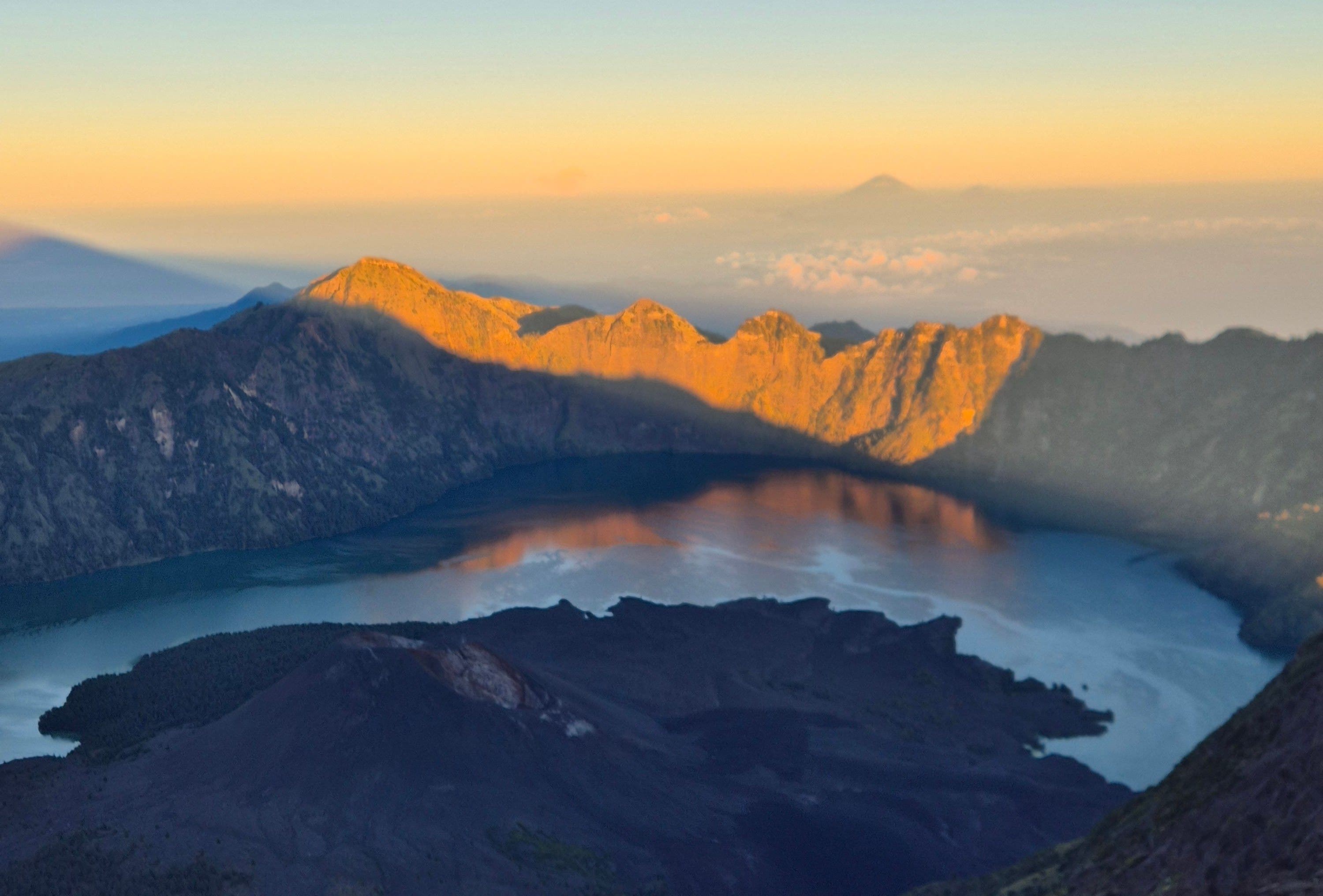
Standing at 3,726 meters above sea level (MDPL), Mount Rinjani is Indonesia's second-highest volcano and one of Southeast Asia's most rewarding trekking adventures. Located on the island of Lombok, just east of Bali, Rinjani offers spectacular volcanic landscapes, breathtaking crater views, natural hot springs, lush forests, and one of the most beautiful crater lakes in Indonesia.
Unlike many volcanoes that can be climbed in a single morning, Mount Rinjani is a true multi-day expedition. Depending on your itinerary, you'll spend between two and four days hiking through dramatically different environments, from open savannahs to volcanic ridges and dense tropical forests.
If you're planning to hike Mount Rinjani, this guide covers everything you need to know before you go, based on our experience completing the 3 Days / 2 Nights trek from Sembalun to Torean.
Mount Rinjani Hiking Routes
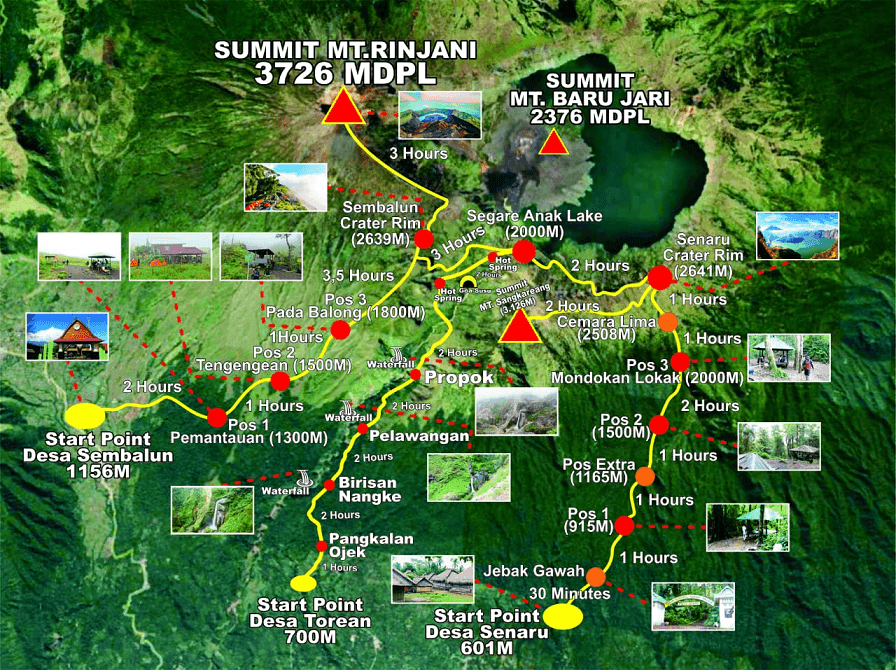
There are three main access routes into Mount Rinjani National Park; see map below
Sembalun Route
The Sembalun route is by far the most popular.
It begins in the village of Sembalun and gradually climbs through large open grasslands before reaching the spectacular Sembalun Crater Rim (2,639 MDPL). This route is used by virtually everyone attempting the summit because it provides the safest and most direct access to the peak.
Although the elevation gain is significant, the trail is generally considered more gradual than Senaru.
Torean Route
The Torean route has quickly become famous as the most scenic route on Mount Rinjani.
Instead of endless volcanic slopes, you'll descend through dramatic valleys, waterfalls, river crossings, cliffs, jungle, natural hot springs and some of the most unique scenery found anywhere on the mountain.
Many hikers now choose to ascend via Sembalun and descend via Torean, as it combines the summit experience with what many consider the most beautiful descent.
Senaru Route
The Senaru route is the traditional western access to the mountain.
It climbs through dense rainforest before reaching the crater rim overlooking Segara Anak Lake. While it offers beautiful forest scenery, many hikers find the descent significantly steeper and harder on the knees than Torean.
For this reason, many trekking companies now recommend descending via Torean whenever possible.
Important Things to Know Before Hiking
Regardless of which route you choose, several regulations apply to everyone entering Mount Rinjani National Park.
A medical certificate is mandatory
Every hiker must present a medical certificate confirming they are fit enough for the trek.
Don't worry if you're travelling from Bali or elsewhere in Indonesia; your trekking company will usually arrange everything. On the morning of the hike, you'll briefly stop at a local clinic before heading to the national park registration office.
Hiring a guide is mandatory
Independent hiking is not permitted.
Every group must be accompanied by licensed guides and porters. Besides being a legal requirement, it's also an important safety measure.
Mount Rinjani is a challenging mountain with steep volcanic terrain, changing weather conditions and difficult navigation. Unfortunately, there have been several serious accidents over the years, making experienced local guides essential.
Daily hiking quotas
To help preserve the national park and reduce overcrowding, Mount Rinjani operates with daily visitor quotas.
During the busy season, permits regularly sell out weeks in advance.
If you're planning your trip during the dry season, it's recommended to book at least 2–4 weeks ahead, especially between June and August.
Best Time to Hike Mount Rinjani
The best months to hike Mount Rinjani are during the dry season from June to September.
During these months you'll generally enjoy:
- Clear sunrise views
- Lower rainfall
- Safer trail conditions
- Cooler temperatures
- Better summit visibility
Outside of the trekking season, parts of Mount Rinjani National Park may close due to heavy rain and landslide risks.
Which Mount Rinjani Trek Should You Choose?
There are three common trekking itineraries.
2 Days / 1 Night
This is the classic summit trek.
- Day 1: Sembalun → Crater Rim
- Day 2:
- Summit at around 2 AM
- Return to camp
- Descend back to Sembalun
This is ideal if your goal is simply reaching the summit and you're short on time.
3 Days / 2 Nights (Our Choice)
This is the itinerary we chose.
It follows the same first two days as the classic summit trek before continuing down the spectacular Torean route instead of returning to Sembalun.
In our opinion, this is the perfect balance between adventure and scenery.
You get:
- the summit
- Segara Anak Lake
- natural hot springs
- jungle trekking
- rivers
- waterfalls
- the incredible Jurassic-like landscapes of Torean
without adding an extra day.
4 Days / 3 Nights
This follows essentially the same route as the 3D2N itinerary but spreads the hiking over an additional day.
It's a great option for hikers wanting a slower pace or photographers wanting more time to enjoy the scenery.
Preparation & Costs
Most trekkers spend the night before either in Senaru or Sembalun.
Both villages offer accommodation ranging from basic homestays to comfortable hotels.
Since the hike starts early in the morning, staying nearby is highly recommended.
Our tour started in Senaru before transferring us to Sembalun on hike day.
How Much Does Mount Rinjani Cost?
We booked a shared (join-in) 3 Days / 2 Nights tour costing approximately 2.5 million IDR per person.
Our package included:
- National Park entrance fees
- Medical certificate arrangements
- Licensed guide
- Porters
- All meals
- Drinking water (1.5L per day)
- Tent
- Sleeping bag
- Sleeping mat
- Transportation from Senaru to Sembalun
- Transportation from Torean back to Senaru
- One night's accommodation in Senaru before the hike
- Toilet paper
One thing not included was tips.
As a general guideline, budgeting around 100,000–150,000 IDR per hiker for the guides and porters is appreciated.
Our package was one of the more affordable options available.
Luxury trekking companies offer experiences costing up to 6 million IDR per person, featuring significantly better meals, comfortable sleeping setups, camping furniture, portable dining tables and a much more premium overall experience.
Guide to Hiker Ratio
National Park regulations require one guide for every five hikers.
Larger groups simply receive additional guides, ensuring everyone remains properly supervised throughout the trek.
Getting to Mount Rinjani
Most trekking companies can also organise transport if you're arriving:
- From Bali via Bangsal Harbour
- From Lombok International Airport
- From Senggigi
- From Kuta Lombok
This makes logistics surprisingly straightforward.
Coming from Bali ? Read our article on how to get to Lombok from Bali.
What to Pack
Packing correctly can make a huge difference to your comfort.
The summit is surprisingly cold.
Temperatures before sunrise can drop to around 5°C, and strong winds often make it feel considerably colder.
If you're attempting the summit, we highly recommend bringing:
- Warm jacket
- Beanie
- Gloves
- Long pants
- Warm socks
- Neck scarf or buff
If you're skipping the summit, you won't need nearly as much cold-weather gear, as most of the trek is warm and sunny.
We also recommend packing:
- Extra drinking water
- Power bank
- Headlamp
- Hat
- Sunglasses
- Sunscreen
- Lip balm
- Wet wipes
- Small first aid kit
- Paracetamol
- Blister plasters
- Personal medication
- Energy snacks
A scarf or buff is particularly useful near the summit where volcanic dust can become unpleasant during windy conditions.
Buying Drinks Along the Trail
One pleasant surprise was discovering that many checkpoints ("Pos"), the crater rim camps and even the lakeshore have small makeshift stalls selling drinks and basic snacks.
You'll find:
- Coffee
- Tea
- Soft drinks
- Instant noodles
- Biscuits
- Small snacks
Prices naturally increase with elevation, generally ranging between 10,000 and 40,000 IDR.
While carrying your own supplies is always recommended, it's reassuring to know you can occasionally treat yourself to an ice-cold drink without carrying it for three days.
Day 1 — Sembalun to the Crater Rim
Our day started early in Senaru.
At around 7:00 AM, we left in the back of a pickup truck for the roughly 45-minute drive to Sembalun.
Along the way, we stopped to obtain our mandatory medical certificates before continuing to the official Mount Rinjani National Park registration office.
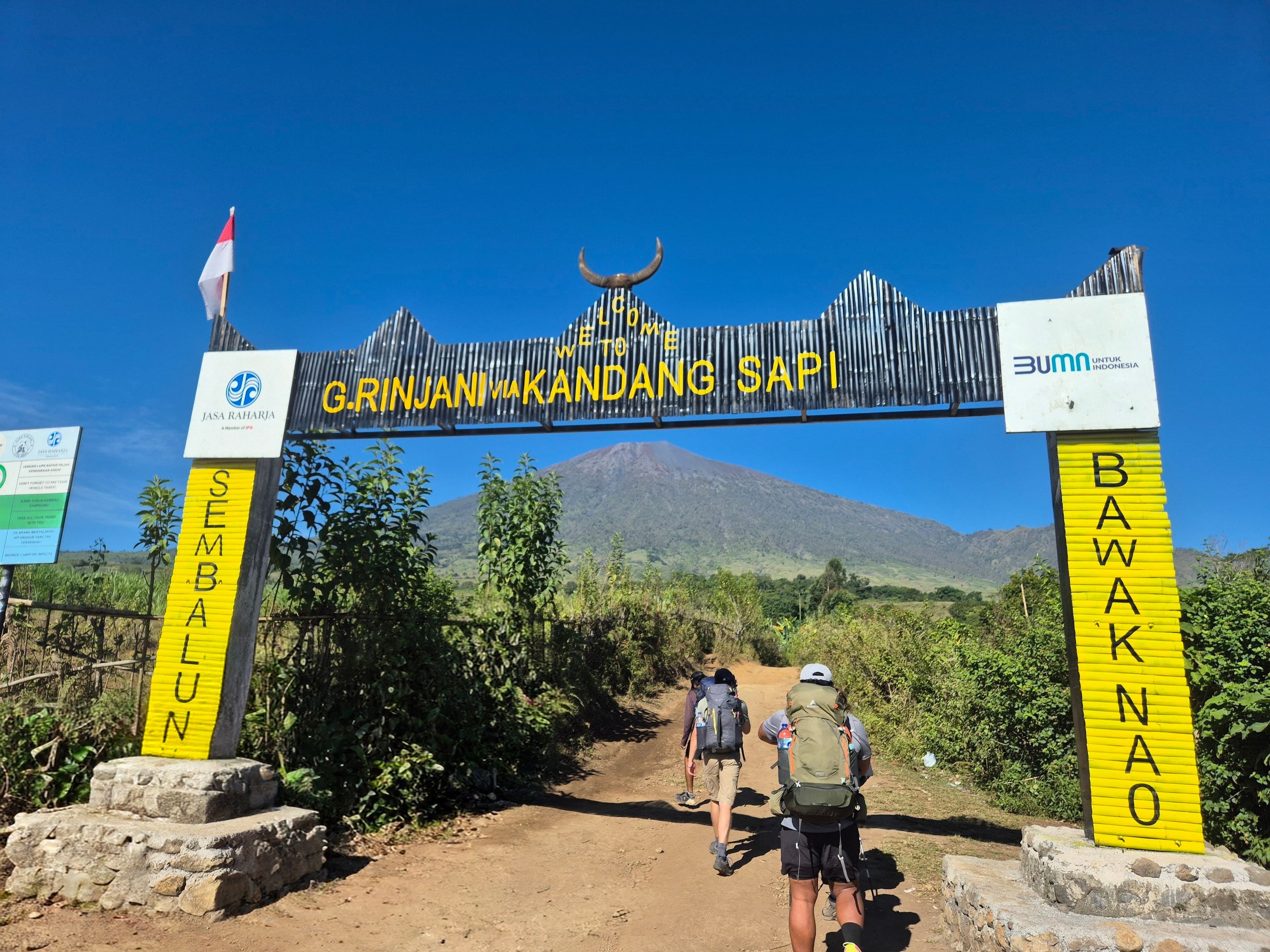
After completing the final paperwork, we finally arrived at the trailhead.
The adventure had officially begun.
Through the Sembalun Savannah
The first section of the trail is surprisingly gentle.
Wide dirt paths cross enormous rolling grasslands with spectacular views over the surrounding valleys.
The walking is easy, but don't underestimate the heat.
There is very little shade during this part of the hike, so wearing a hat, drinking regularly and applying sunscreen are essential.
Around 11:30 AM to noon, we stopped for lunch at Pos 1 (Pemantauan).
Our porters, who had somehow overtaken us carrying equipment that probably weighed more than we did, already had lunch prepared by the time we arrived.
Watching them effortlessly pass us while carrying camping gear, food supplies and cooking equipment was honestly one of the most impressive parts of the entire trek.
The Climb Begins
After lunch, the character of the hike changes dramatically.
The easy walking disappears and the trail begins steadily climbing towards the crater rim.
Although the terrain isn't technically difficult, the continuous ascent quickly becomes tiring.
Thankfully, the trail passes several rest stops where hikers can catch their breath before continuing upwards.
As the afternoon progresses, the views become increasingly spectacular.
Every break offers another reason to stop—not because you're tired, but because the scenery keeps getting better.
After several hours of climbing, we finally reached the Sembalun Crater Rim (2,639 MDPL) between 5:00 PM and 6:00 PM, depending on each group's pace.
The reward was immediate.
Standing on the rim overlooking Segara Anak Lake, with Mount Barujari rising from the middle of the crater and tomorrow's summit towering above us, instantly made every step worthwhile.
Camping on the Crater Rim
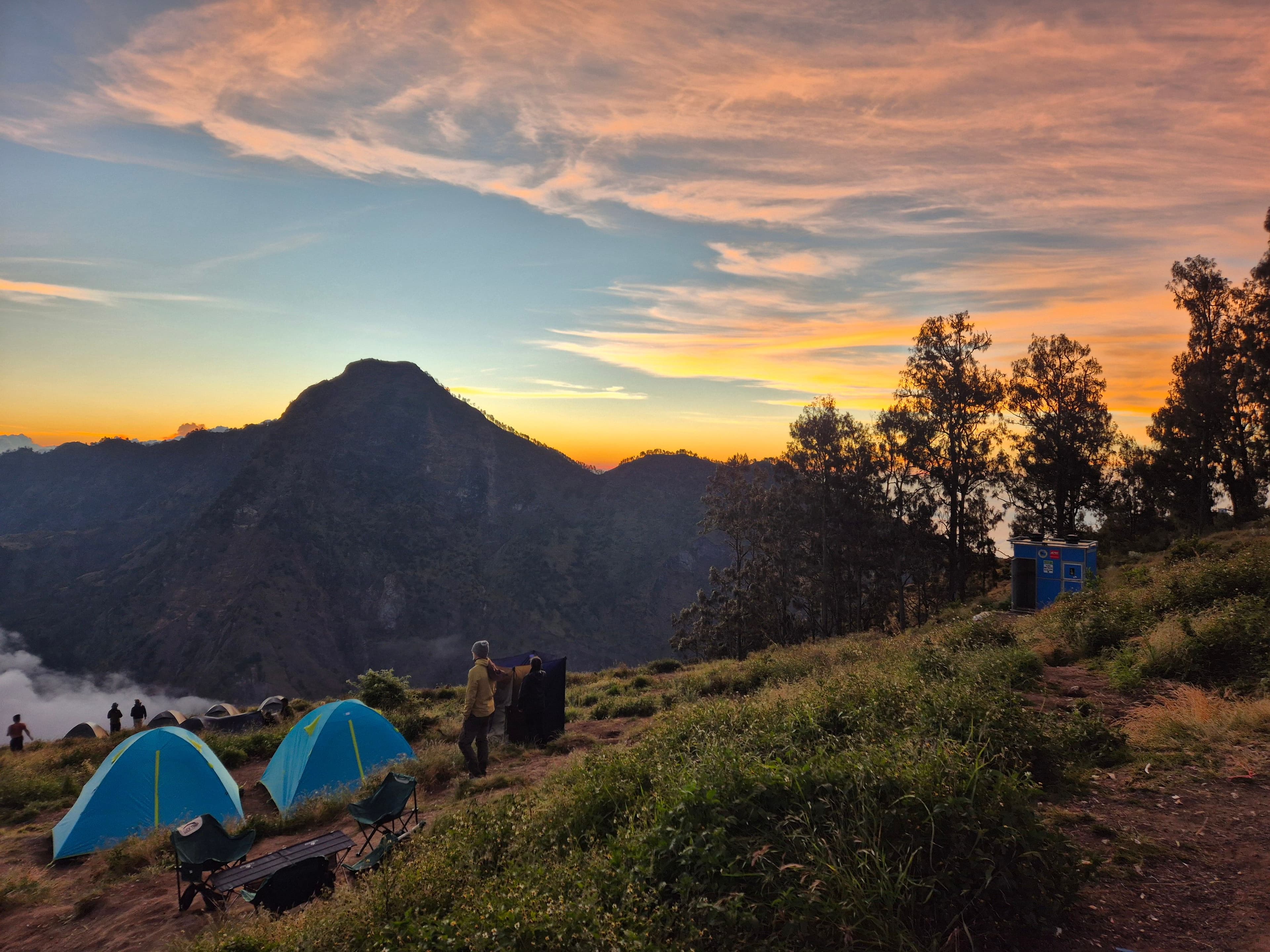
The crater rim is surprisingly busy.
Trekkers arriving from multiple routes all converge here, creating what almost feels like a temporary mountain village.
By the time we arrived, our porters had already set up camp and were preparing dinner.
After hiking all day, sitting down to a freshly cooked meal while watching the sunset over the crater was an unforgettable experience.
Toilet facilities are available at camp, although expectations should remain modest.
There are both squat and seated toilets, but with hundreds of hikers passing through, cleanliness and smells can be challenging.
Interestingly, our guides also had a small private toilet dug into the ground inside a simple tent enclosure, which honestly felt cleaner than the communal facilities.
Since summit day starts incredibly early, everyone heads to bed soon after dinner.
By around 7:00 PM, darkness had completely fallen over the mountain.
Most hikers were asleep by 8:00–9:00 PM, trying to get a few hours of rest before alarms began ringing at 2:00 AM for the summit push.
Day 2 — Summit Day and the Spectacular Torean Descent
If Day 1 was all about steadily making your way to the crater rim, Day 2 is undoubtedly the highlight and the toughest day of the entire trek.
Our alarms went off at 2:00 AM.
After putting on every warm layer we had packed, we had a quick breakfast prepared by our porters before leaving camp between 2:30 and 3:00 AM. Looking out from camp, hundreds of tiny headlamps could already be seen zig-zagging up the mountainside towards the summit.
It was time to join them.
The Summit Push
Reaching the summit of Mount Rinjani is not an easy hike.
Although anyone with a reasonable level of fitness can complete the trek with determination, the summit ascent is physically demanding and shouldn't be underestimated.
The first 30 minutes are fairly straightforward as the trail gradually climbs away from the crater rim.
Then comes what many hikers consider the hardest section of the entire mountain.
For around 45 minutes to an hour, the trail becomes incredibly steep and consists almost entirely of loose volcanic sand. Every step forward feels like taking two steps back, as your feet sink into the soft ground and slide downhill. It often feels more like trying to walk uphill through deep snow than hiking on a mountain.
Everyone around us naturally found their own rhythm.
Walk twenty steps.
Stop.
Catch your breath.
Repeat.
Because the hike starts in complete darkness, your world is reduced to the narrow beam of your headlamp and the lights of hikers stretching far ahead into the night. Combined with the loose volcanic ash, the air can become very dusty, making a buff or face covering incredibly useful.
Eventually, the steep sandy climb eases and the trail follows the crater ridge towards the summit.
While less steep, this section brings its own challenges.
Strong winds begin to pick up, the trail becomes narrower in places, and the terrain alternates between loose sand and large volcanic rocks. Careful footing becomes increasingly important, especially before sunrise when visibility remains limited.
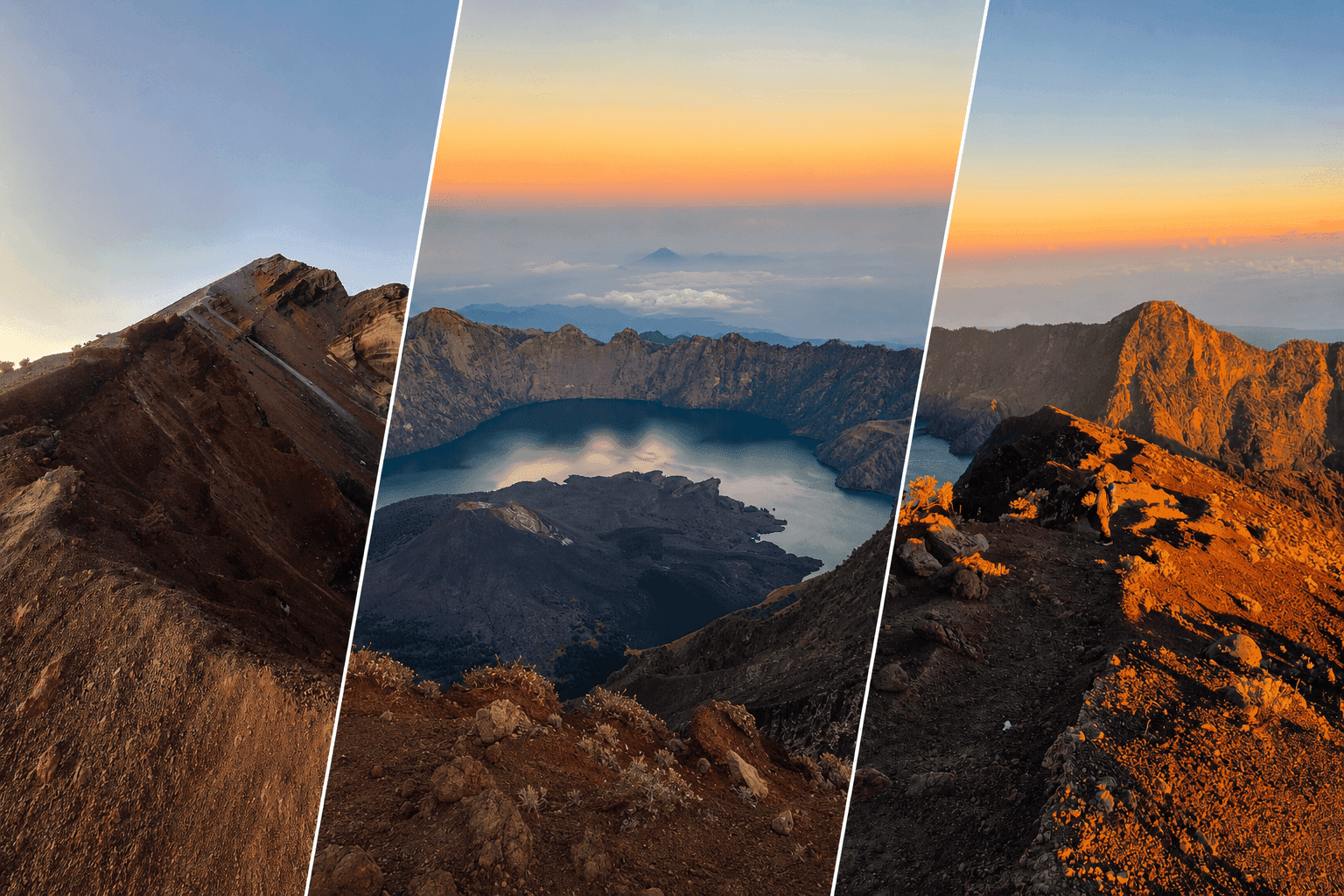
The final thirty minutes to the summit require one last effort before eventually reaching Mount Rinjani Summit (3,726 MDPL).
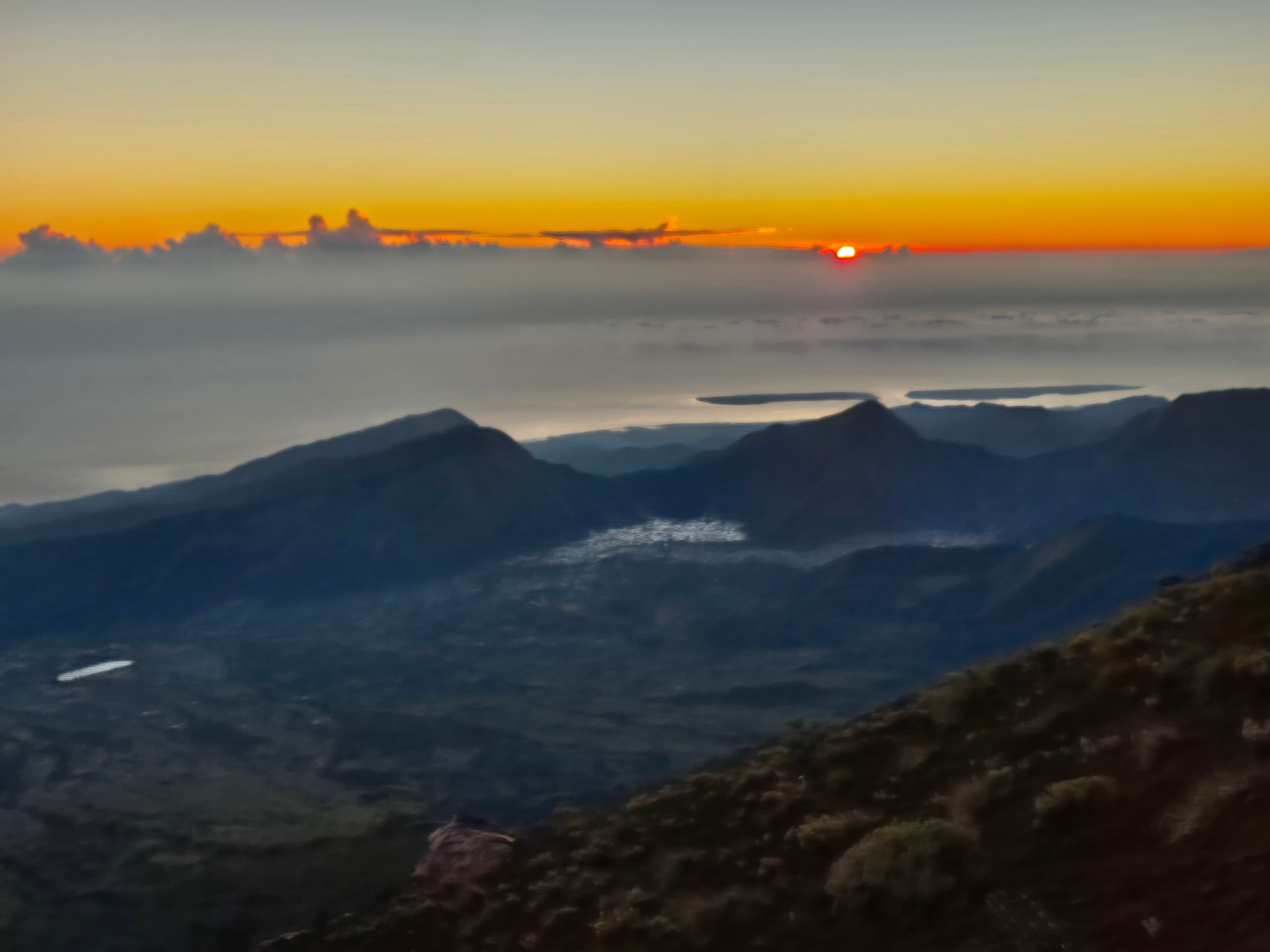
Standing on Indonesia's second-highest volcano as the sun slowly rises over Lombok, Bali, Sumbawa and the surrounding islands is an unforgettable experience.
After hours of climbing in darkness, watching the landscape gradually emerge beneath the morning light made every difficult step worthwhile.
Back to Camp
As incredible as reaching the summit feels, the day is only just beginning.
After spending some time enjoying the views and taking photos, we carefully made our way back down to the Sembalun Crater Rim.
Descending the loose volcanic sand is much quicker than climbing it, although it can be quite hard on the knees and requires careful footing to avoid slipping.
Back at camp, breakfast was already waiting for us.
Having a proper meal while overlooking Segara Anak Lake was a welcome reward after several hours of hiking.
Once breakfast was finished, we packed our bags and prepared for the second part of the day.
The descent towards the lake.
Down to Segara Anak Lake
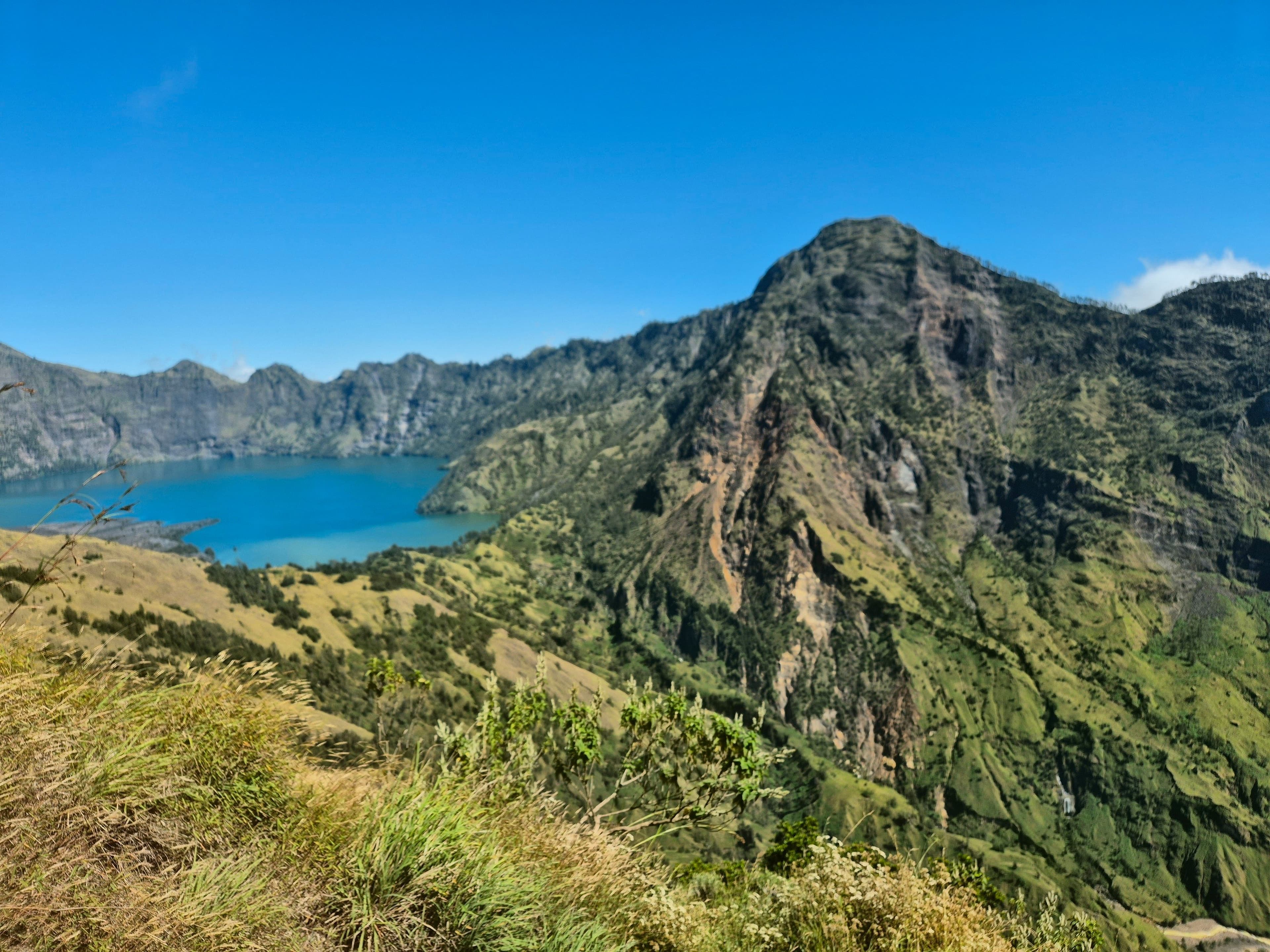
Leaving the crater rim, the trail immediately drops steeply towards the crater floor.
This section is surprisingly technical.
In several places, it feels more like scrambling than hiking, with large rocks requiring careful footing and occasional use of your hands for balance.
Take your time here.
The scenery is spectacular, but this is one of the steeper parts of the trek.
Eventually, the trail levels out as you reach the shores of Segara Anak, the beautiful volcanic crater lake sitting inside Mount Rinjani.
This is where we stopped for lunch.
After nearly nine hours of hiking since waking up, it was exactly the break we needed.
Although the crystal-clear lake looks incredibly inviting, swimming is not permitted as it is considered a sacred place by the local Sasak and Balinese communities.
Relaxing in the Natural Hot Springs
Not long after leaving the lake, we reached one of the highlights of the entire Torean route.
The natural hot springs.
After two days of hiking, dust and sweat, soaking in naturally heated volcanic water felt absolutely incredible.
Whether or not the hot springs truly help muscle recovery is open to debate, but they certainly felt amazing after such a long day.
Perhaps more importantly, it was also the closest thing we'd had to a shower since leaving civilization.
If your itinerary includes enough time, don't rush through this stop.
You'll appreciate it far more than you expect.
Camping Along the Torean Route
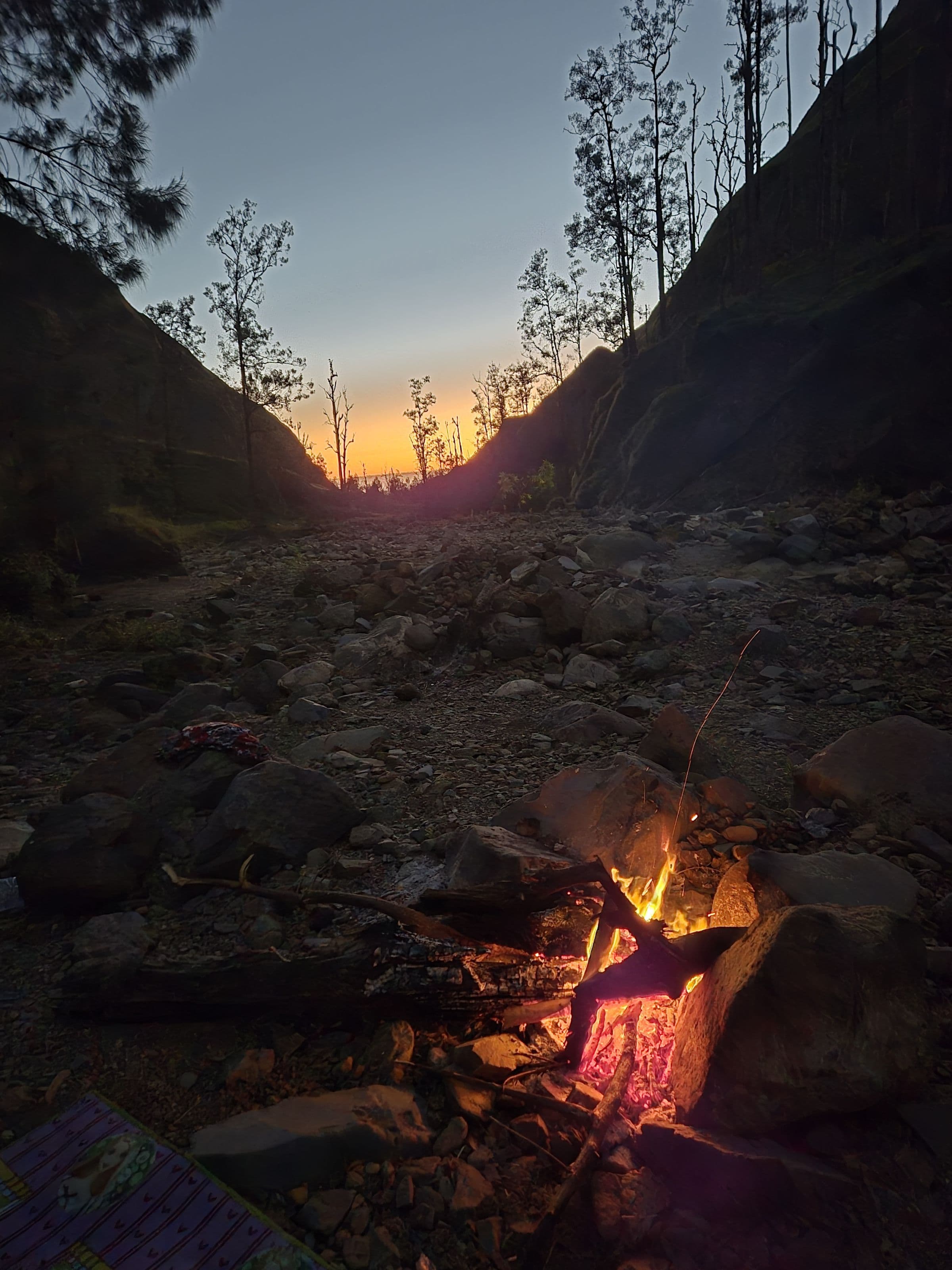
After leaving the hot springs, we continued hiking for roughly another hour before reaching our campsite for the night.
Unlike the crater rim, there isn't one fixed camping location.
Different trekking companies choose different camps depending on their pace and itinerary.
Our guides selected a peaceful riverside campsite where we spent the night listening to the sound of flowing water instead of hundreds of fellow hikers.
Once again, our porters somehow managed to arrive well before us, setting up camp and preparing dinner while we simply collapsed into our tents.
After such a physically demanding day, nobody stayed awake very long.
Dinner, a few conversations with the group, then straight to bed.
Day 3 — The Jurassic Park Trail to Torean
Compared to the previous day, Day 3 feels almost relaxing.
Almost.
We woke naturally around sunrise at approximately 6:30 AM, enjoyed breakfast beside the river and packed up camp one final time.
By around 7:30 to 8:00 AM, we began the final stage of our Mount Rinjani adventure.
Through the Valley
The Torean route is unlike anything we'd experienced during the previous two days.
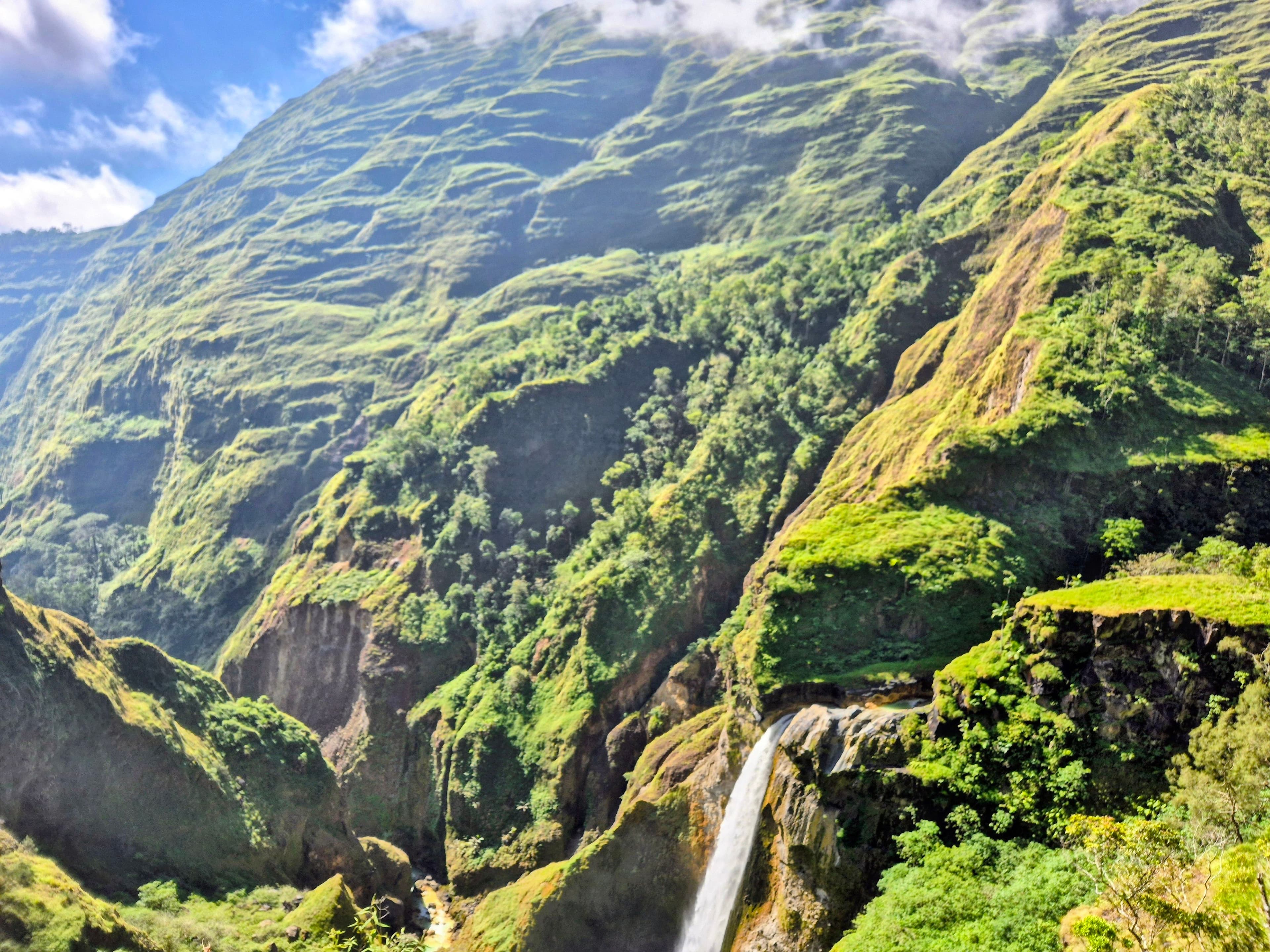
Instead of volcanic landscapes, the trail follows lush green valleys carved between towering cliffs.
Towering rock walls, waterfalls, dense vegetation and winding rivers create scenery that feels completely different from the exposed ridges higher up the mountain.
It's easy to understand why many hikers nickname this section the "Jurassic Park Trail."
Several parts genuinely feel as though dinosaurs could emerge from the jungle at any moment.
If you're wondering whether the extra day is worth it simply to descend via Torean, our answer would be an emphatic yes.
In many ways, this was our favourite section of the entire trek.
The Final Descent
The trail continues descending for roughly five hours.
The first three to four hours remain mostly within the spectacular open valley before eventually entering dense tropical forest for the final section.
Along the way, we stopped once more for lunch before completing the final descent into the village of Torean.
Depending on your group's pace, you'll usually arrive between 1:00 PM and 2:00 PM.
Waiting at the trailhead was our driver, who took us on the approximately 40-minute journey back to Senaru, marking the official end of an unforgettable three-day adventure.
Is the 3D2N Trek Worth It?
Absolutely.
Although the classic 2 Days / 1 Night itinerary is enough if your only goal is reaching the summit, we genuinely believe the 3 Days / 2 Nights Sembalun to Torean route offers the complete Mount Rinjani experience.
Not only do you stand on the summit of Indonesia's second-highest volcano, but you also experience:
- The spectacular Sembalun Crater Rim
- Segara Anak crater lake
- Natural volcanic hot springs
- Towering waterfalls
- Lush tropical forests
- The incredible Jurassic-like landscapes of Torean
The additional day transforms the trek from simply climbing a mountain into an unforgettable journey through one of Indonesia's most diverse and beautiful national parks.
Yes, it's physically demanding.
Yes, you'll be tired.
And yes, you'll probably question your life choices somewhere during the summit ascent.
But looking back, it's one of the most rewarding hikes we've ever completed.
If you're reasonably fit, enjoy adventure, and don't mind pushing yourself for a few days, Mount Rinjani absolutely deserves a place on your Indonesia bucket list.
Frequently Asked Questions
How difficult is the Mount Rinjani hike?
The summit trek is considered difficult due to the long hiking days, steep elevation gain and loose volcanic sand near the summit. Previous hiking experience is helpful but not essential if you have a good level of fitness.
Can beginners hike Mount Rinjani?
Many beginners successfully complete the trek every year. However, you should be comfortable walking for several hours each day and prepared for a physically demanding summit climb.
Is a guide mandatory?
Yes. Independent hiking is not allowed inside Mount Rinjani National Park. All hikers must join a licensed trekking company with certified guides.
Do you need a medical certificate?
Yes. Every hiker must obtain a medical certificate before entering the national park. Most trekking companies arrange this for you as part of the tour.
What is the best route?
If time allows, we highly recommend hiking up via Sembalun and down via Torean. It combines the summit with what is, in our opinion, the most beautiful scenery on the mountain.
How cold does Mount Rinjani get?
During the summit ascent, temperatures can fall to around 5°C, with strong winds making it feel significantly colder. Warm clothing is essential if you're attempting the summit.
Can you buy food and drinks during the trek?
Yes. Several checkpoints, the crater rim camps and the lakeshore have small stalls selling drinks, snacks and instant noodles. Prices typically range from 10,000 to 40,000 IDR, depending on the location.
Would we do it again?
Without hesitation.
If we returned, we'd choose the exact same 3 Days / 2 Nights Sembalun to Torean itinerary. It strikes the perfect balance between challenge, scenery and overall experience, and we'd recommend it to anyone looking for one of Indonesia's greatest trekking adventures.