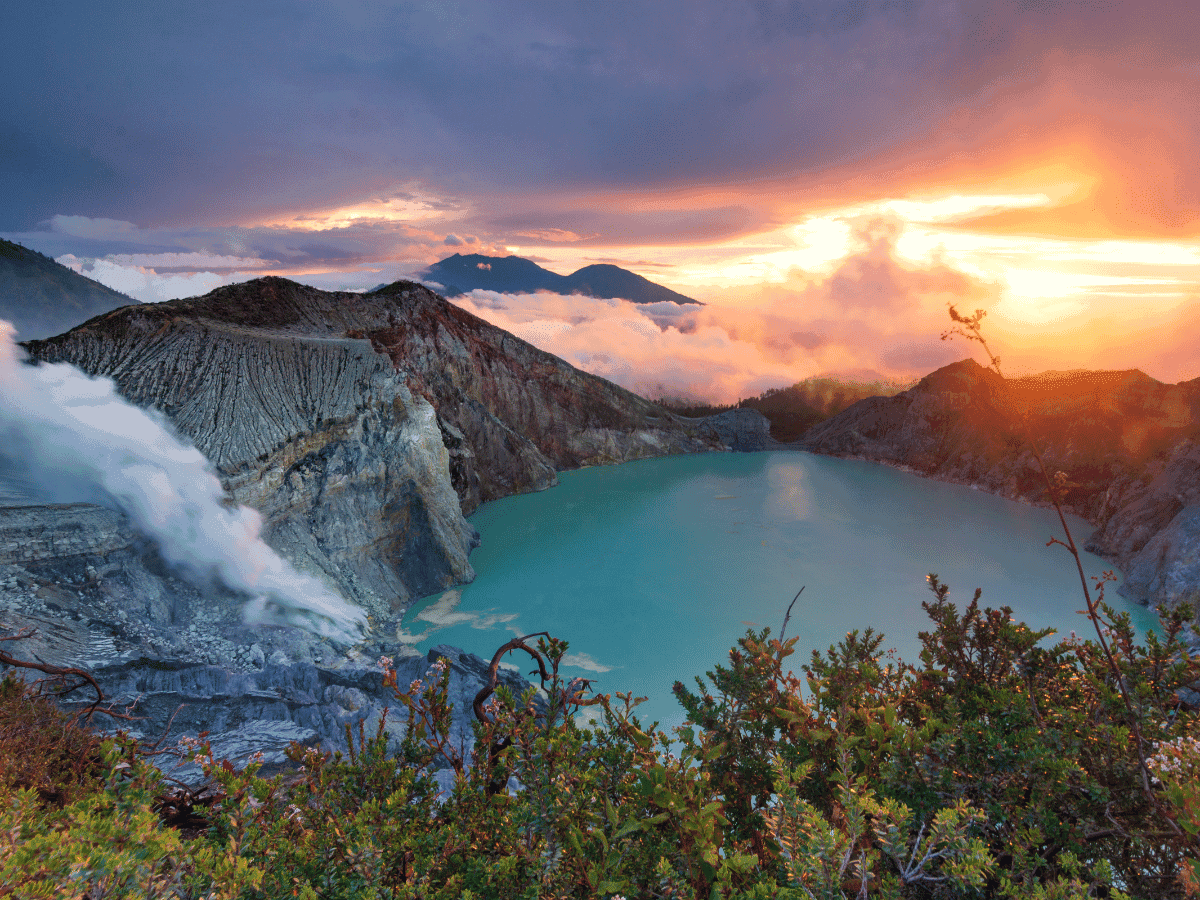
Mount Ijen is one of Southeast Asia's most extraordinary natural spectacles, and the fact that most travellers skip it entirely is both baffling and fortunate for those who do make the trip. An active stratovolcano sitting inside the Ijen Crater complex in East Java, it is best known for its electric-blue flames, one of only two places in the world where this phenomenon occurs naturally, and its turquoise sulphuric crater lake, the largest of its kind on the planet.
This is not a Bali attraction. It is a journey out of Bali. But for anyone willing to cross the strait and lose a night of sleep, it is among the most visually surreal experiences Indonesia has to offer.
What is Mount Ijen?
Mount Ijen rises to 2,799 metres above sea level within the Ijen Plateau in the Banyuwangi Regency of East Java. The volcano is active, and at its summit sits a one-kilometre-wide crater lake filled with turquoise sulphuric acid water. The lake, known as Kawah Ijen, holds around 36 million cubic metres of water with a pH close to zero, making it one of the most acidic lakes in the world due to its sulphuric and hydrochloric acid content. Do not let the colour fool you into thinking it is safe to touch. Direct contact will burn your skin immediately, potentially severely, and any contact with your eyes will cause lasting damage.
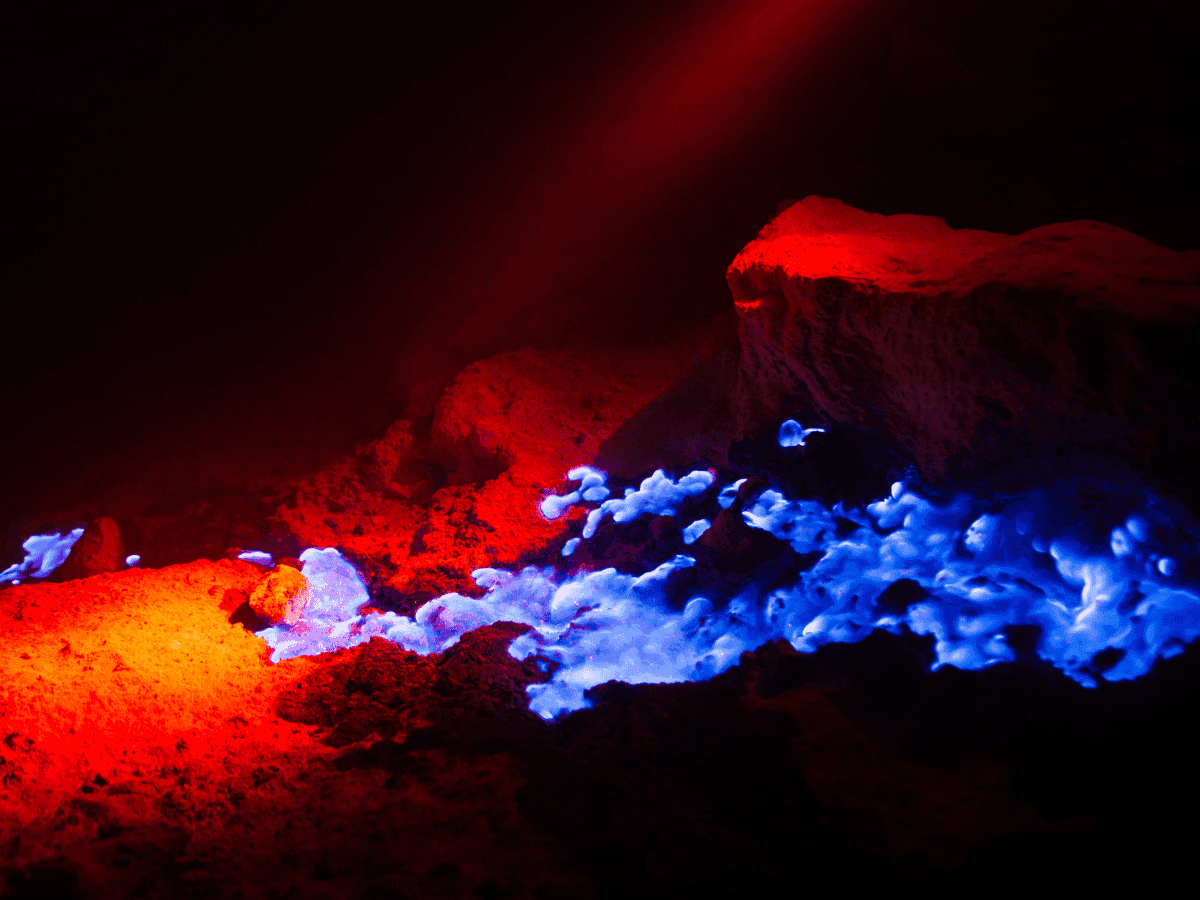
The phenomenon that draws most visitors is the blue fire, or Api Biru. This occurs when sulphuric gases escape through vents at extremely high temperatures and ignite upon contact with air, producing vivid blue flames that can reach up to five metres in height. The flames exist both day and night, but they are only visible in darkness, which is why almost all treks begin at 2:00 AM.
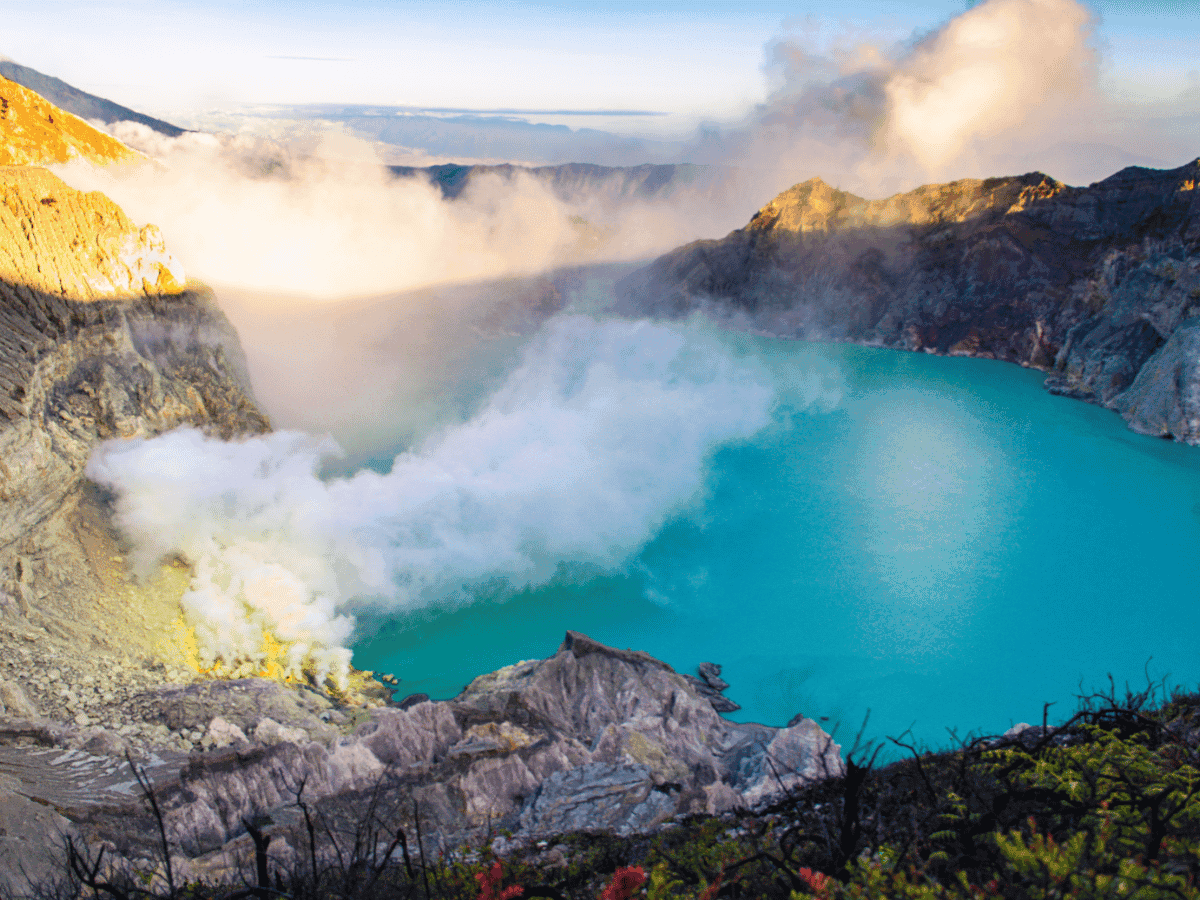
During daylight hours, the crater reveals a different kind of drama. The acidic turquoise lake set against the volcanic landscape is otherworldly, and on clear days the views across East Java are vast. You may also witness local sulphur miners at work, carrying loads of solidified sulphur up to 80 kilograms on bare shoulders from the crater floor. It is a reality check that lingers long after you return to Bali.
How to Get to Mount Ijen from Bali
Mount Ijen is located in East Java, approximately 4 to 5 hours from Kuta/Seminyak/Canggu by road and ferry. There is no shortcut, but the logistics are manageable if planned in advance.
Option 1: Organised Tour from Bali (Recommended for Most Travellers)
- Booking an organised tour is the single most practical decision you can make for this trip, and not just for convenience. A reputable tour operator will handle your entry permit booking, arrange your medical certificate (more on that below), provide a gas mask, and ensure you reach the trailhead at the right time. For first-time visitors, this removes every logistical variable that could derail the trip.
- A standard tour from Bali typically includes hotel pickup and drop-off, private or shared transport to the Gilimanuk ferry terminal in West Bali, the ferry crossing to Ketapang in Banyuwangi, transport to the Paltuding trailhead, a certified guide for the crater trek, and return transfer to Bali. Departure is usually around 6 PM, with return to Bali by early afternoon the following day. Budget between IDR 400,000 and IDR 900,000 per person depending on group or private arrangements.
Option 2: Self-Drive or Private Driver
- If you have rented a car or are travelling with a private driver, the route is straightforward. Take the main road west through Bali toward Gilimanuk, catch the public ferry across the Bali Strait to Ketapang in Banyuwangi (the crossing takes roughly 45 minutes and runs 24 hours), then continue by road to the Paltuding trailhead. Note that if you go this route, you are responsible for sorting your own permit, medical certificate, and gas mask independently.
Option 3: Fly to Banyuwangi
- Travellers combining Ijen with other East Java destinations can fly direct to Banyuwangi (BWX) from Bali in under 30 minutes. This option only makes practical sense if you are continuing onward to Bromo or Surabaya afterward, given the added airport transfer time.
The Ijen Trek: What to Expect
Distance and Duration
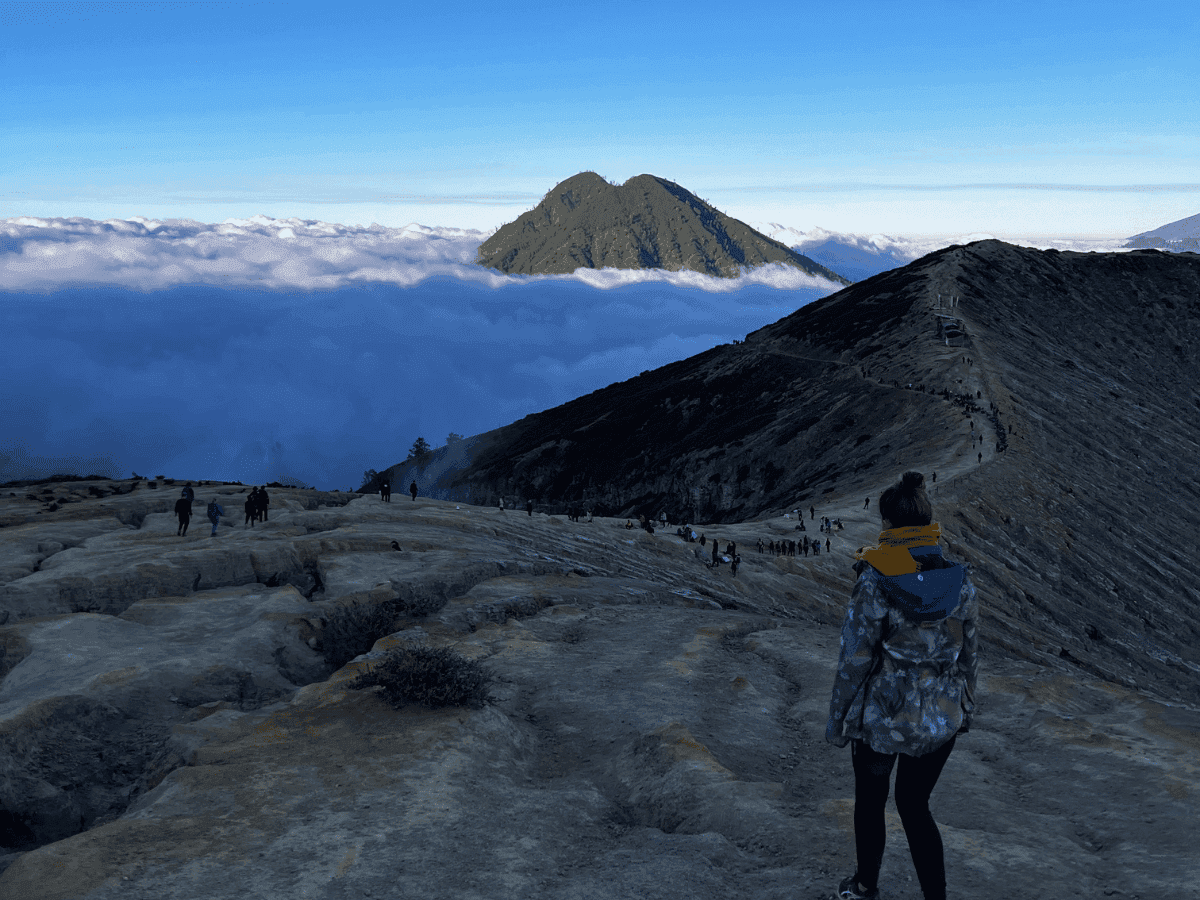
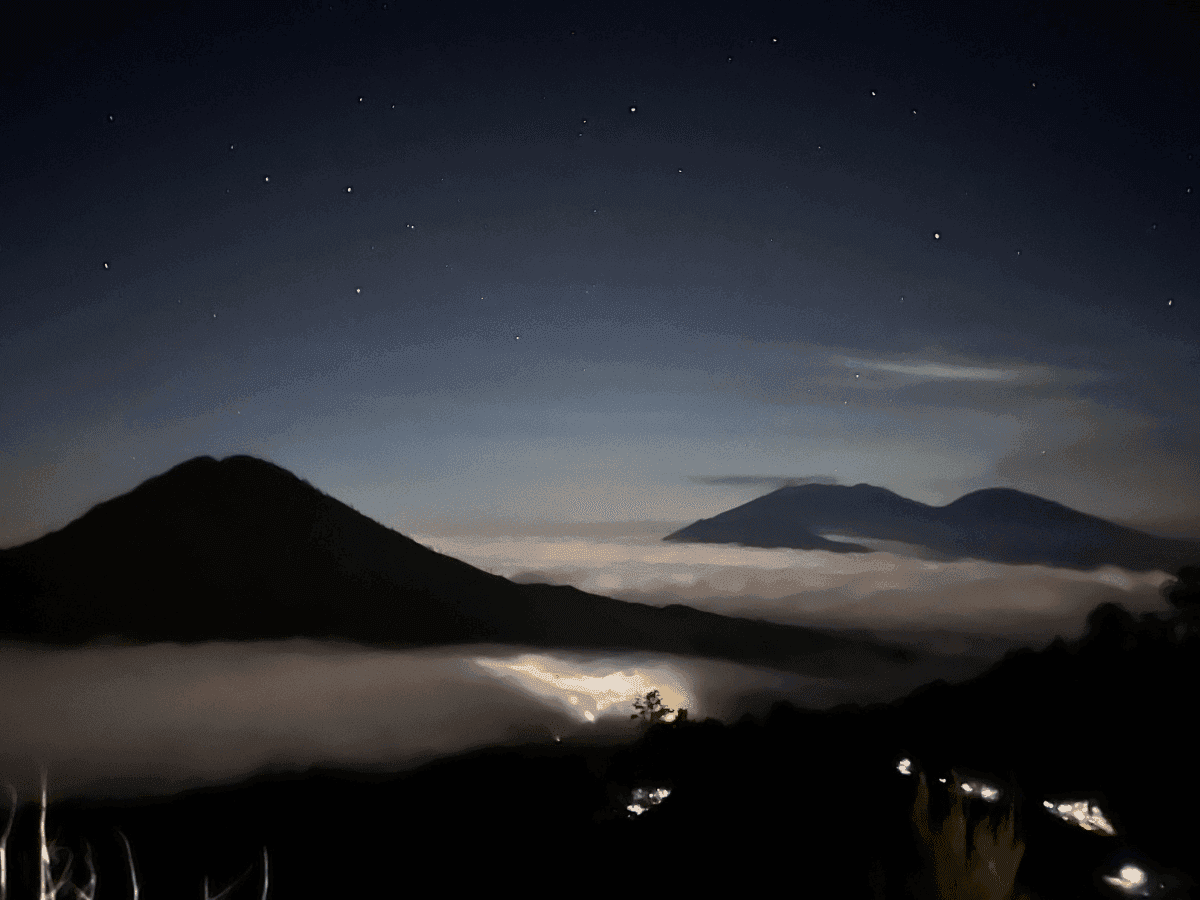
The trail from Paltuding to the crater rim is approximately 3 kilometres each way with an elevation gain of around 700 metres. Most fit walkers complete the ascent in 1.5 to 2 hours. The descent from the rim to the crater lake floor adds another 30 to 45 minutes each way if you choose to go down for a closer look at the blue fire.
Total time on the mountain, including time at the crater, is typically 3 to 4 hours.
Difficulty Level
Moderate. The path is wide, well-maintained, and clearly marked. That said, it is steep in sections and becomes loose and slippery with ash further up. The final descent into the crater floor is the most physically demanding part, involving a narrow rocky path in the dark. If you have knee problems, trekking poles are worth bringing.
The "Lamborghini": A Ride Up the Mountain
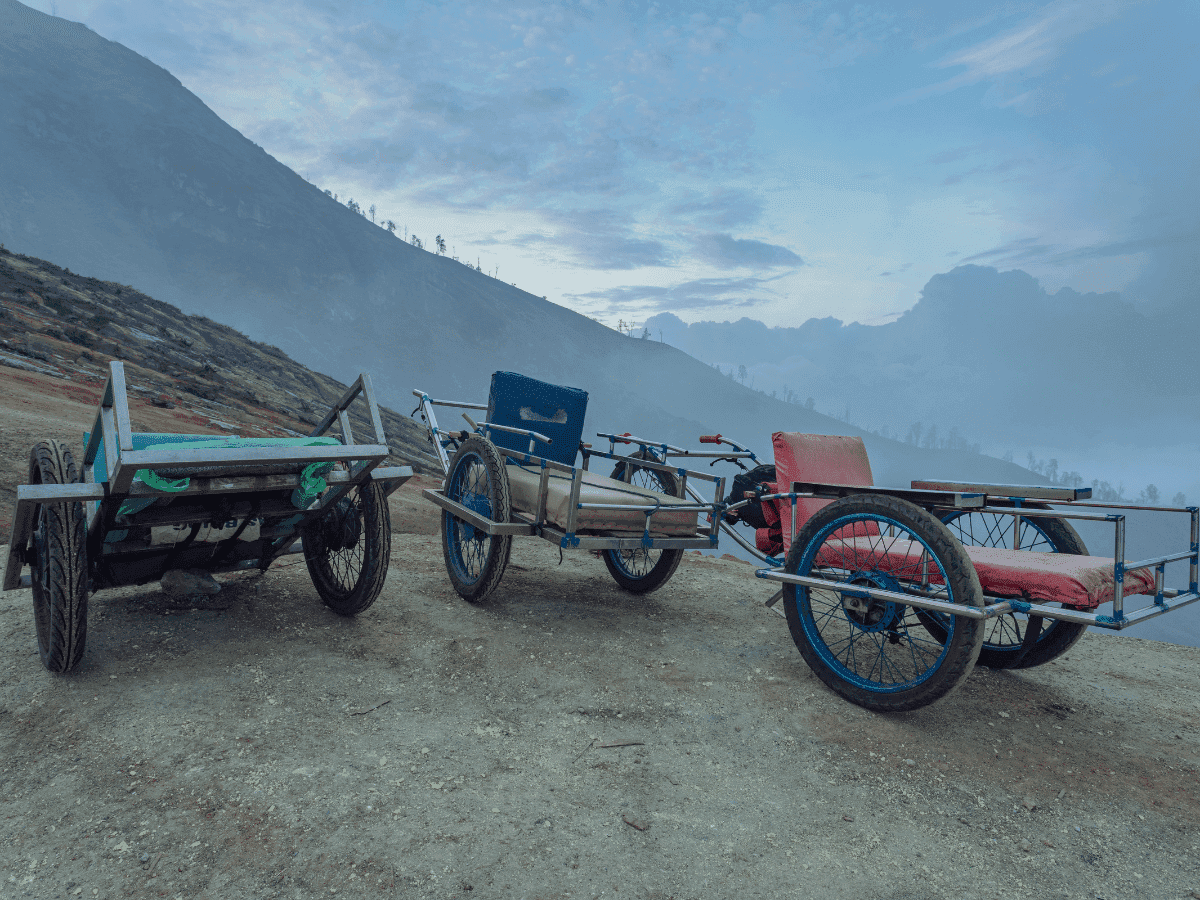
If the trek sounds intimidating, or you simply want to save your energy for the crater descent, locals offer a service nicknamed the "Lamborghini": a modified push-cart, mounted on motorbike wheels and pushed by one or two porters, that carries hikers up the steep sections of the trail. It is not glamorous, but it works, and for travellers with limited fitness, mobility concerns, or simply a strong aversion to 2 AM uphill walking, it is a legitimate option.
This is physically demanding work performed in the dark on a volcanic slope, and the fee reflects that. Expect to negotiate the rate per ride!
Medical Certificate Requirement: What You Need to Know
Since January 2024, a medical health certificate is mandatory for all hikers visiting Kawah Ijen. This requirement was introduced by the East Java Conservation Agency (BBKSDA Jawa Timur) following a fatality on the mountain linked to a visitor's blood pressure condition. Rangers at the Paltuding basecamp will check your certificate before allowing entry. No certificate means no entry, regardless of whether you have already paid for your permit.
The good news is that this is not a complex or expensive document. It is a basic clinical checkup at a local hospital or clinic in Banyuwangi, involving a blood pressure check and a short health questionnaire. The certificate typically costs between IDR 25,000 and IDR 100,000 depending on the facility, and several clinics in Banyuwangi are open 24 hours. You cannot obtain the certificate if you have a history of asthma, heart conditions, or other serious illnesses that make strenuous activity at altitude a genuine risk.
The certificate must be issued within three days of your hike.
If you book an organised tour, your operator will almost always arrange the medical checkup on your behalf, often at your hotel the evening before the trek, which removes the need to locate a clinic yourself. This is one more reason why booking a tour is the recommended approach for visitors coming from Bali.
Essential Tips Before You Go
Most of the logistics below are handled automatically if you book a reputable tour. If you are going independently, every single one of these is your responsibility to sort before you reach the trailhead.
-
Book your permit online. Tickets must be booked in advance through tiket.bbksdajatim.org. Walk-up tickets are not guaranteed. Weekday entry costs IDR 100,000. Weekend entry costs IDR 150,000. If you can be flexible, a weekday visit saves money and tends to be less crowded.
-
Secure your medical certificate before you arrive at Paltuding. See the section above. Without it, you will be turned away at the gate regardless of what else you have organised.
-
Rent a gas mask at Paltuding, and do not skip this. Professional gas masks are available for rent at the Paltuding base camp for IDR 45,000. Surgical masks and cloth masks offer zero protection against sulphuric fumes. The acid in the air is concentrated enough to cause severe eye irritation.
-
Leave your contact lenses at home. Sulphuric acid in the air will irritate your eyes regardless, and contact lenses make this significantly worse. Wear glasses or go without.
-
Wear clothing you are prepared to throw away. This is not an exaggeration. Sulphuric acid in the air will permanently damage fabric and leave a smell that survives multiple washes. Wear your oldest clothes.
-
Start hiking at 2:00 AM. The blue fire burns at around 600°C but is only visible in complete darkness. The moment the sun rises, the flames disappear entirely. A 2:00 AM start gives you time to ascend and reach the crater before light kills the effect.
-
Bring a headlamp, not just your phone torch. The 3-kilometre ascent on rocky terrain in the dark requires both hands free. A headlamp with fresh batteries is non-negotiable.
-
Layer up. Temperatures at the crater rim drop below 10°C before sunrise. Pack a proper fleece or light down jacket and long pants on top of your expendable clothing.
-
Carry cash in Indonesian Rupiah. There are no ATMs near the trailhead. Bring cash for gas mask rental, water, snacks, and tipping your guide.
Best Time to Visit Mount Ijen
The dry season from April to October offers the most reliable conditions, with clear skies and safer trails. Heavy rain between December and March turns the steep dirt paths into slick mud and frequently triggers sudden park closures.
Beyond seasonality, avoid the first Friday of every month. Kawah Ijen shuts down entirely on this day for conservation work. Check the calendar before committing to a date.
Within any given visit, the 2:00 AM start time is the single most important variable. The blue fire vanishes at sunrise. Everything else is secondary.
A Note on Responsible Tourism at Ijen
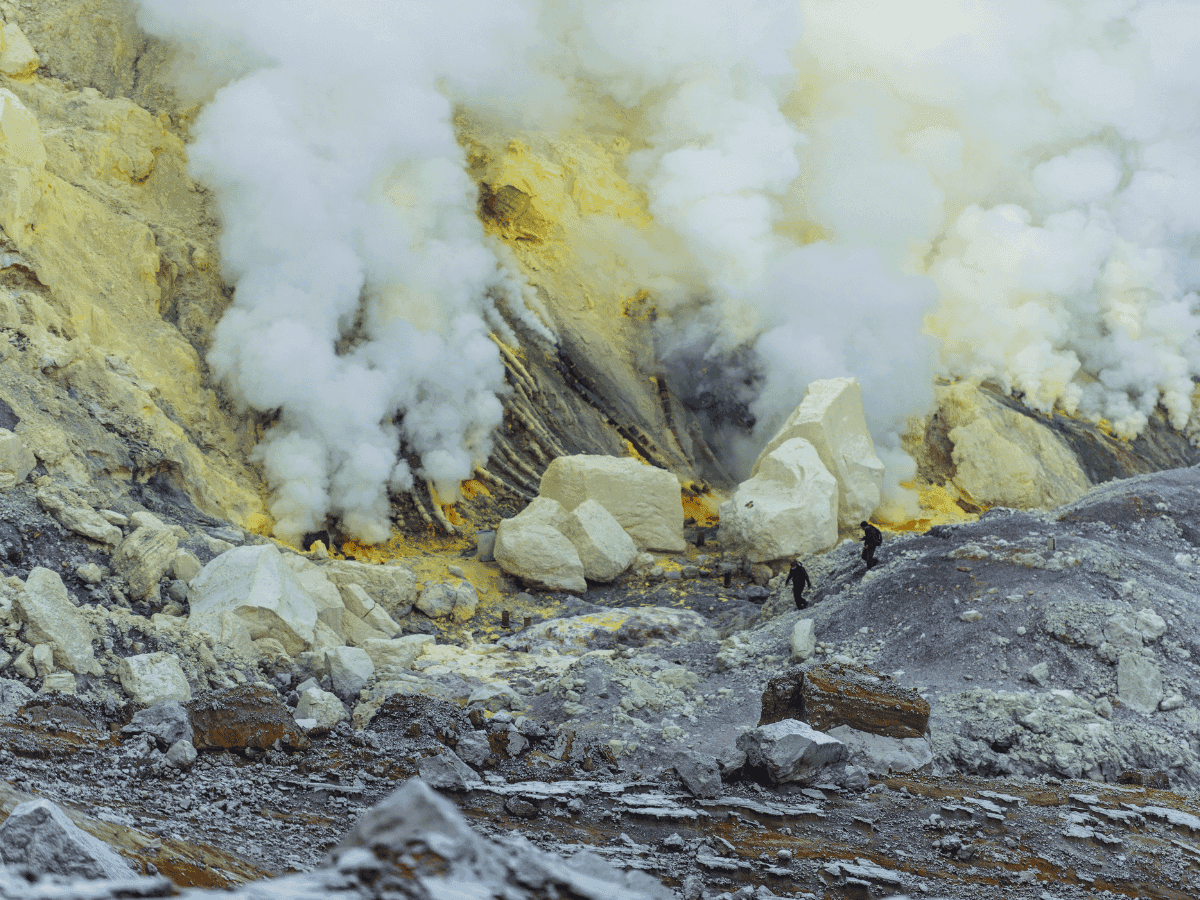
The sulphur miners you will likely encounter at the crater are not a tourist attraction. They work gruelling hours in toxic conditions for modest daily wages, carrying loads that would challenge most trained athletes. If you want to show appreciation, a direct tip to any miner who assists you on the trail is more meaningful than anything else. Photograph them with respect and always ask permission first.
Stick to the marked trail. The crater rim is unstable in places and the acid lake is genuinely lethal. Follow your guide's instructions.
Is Mount Ijen Worth the Trip from Bali?
If you are in Bali primarily to lie by a pool, probably not. The round trip is roughly 24 hours with minimal sleep, and it requires crossing to a different island entirely.
If you collect experiences that are difficult to replicate anywhere else on earth, there is no question. There is nowhere else in Southeast Asia where you can watch blue fire burn inside a volcanic crater before sunrise, then watch the world's most acidic lake turn turquoise as the sun comes up.
One practical note: plan the Ijen trip for the middle of your Bali stay rather than the final night. A bad night's sleep is manageable when you have days to recover. It is considerably less manageable before a long-haul flight.